#19
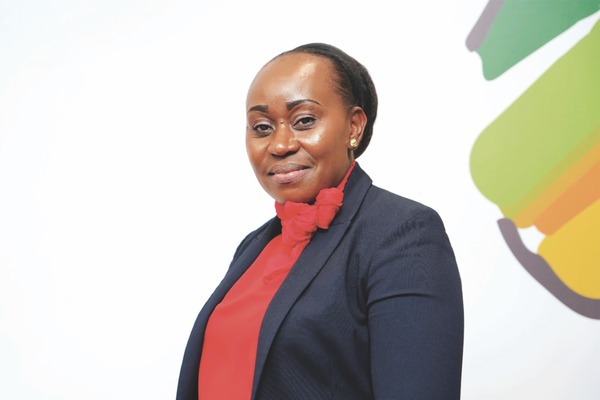
JULIA NECHESA SHISIA
EXECUTIVE DIRECTOR, BANCASSURANCE ABSA BANK KENYA PLC
The Discipline of Leadership
The main question
What has four years at the top of Kenya’s Bancassurance market taught me about people, performance and purpose?
My answer
Getting to the top is an achievement. Staying there is a leadership test. For the past four years, I have had the privilege of leading a Bancassurance business that has remained at the forefront of the Kenyan market. I am proud of that achievement; I however increasingly find myself less interested in the position itself and more interested in what sits behind it.
Q. What does it really take to build a business that performs and grows consistently? What does it take to keep people motivated after the excitement of the first win has passed? And perhaps most importantly, what does it take of the leader?
A. My answer has increasingly become one word: discipline. Not discipline in the narrow sense of rules and routines, but the discipline to stay focused when there are distractions, to remain curious when experience tells you that you already know enough, to make difficult decisions when they are unpopular, and to keep showing up with energy and conviction long after the applause has faded.

Leadership begins with self-leadership
I have come to believe that before we lead businesses, we must learn to lead ourselves. Personal discipline is often invisible. It is the preparation nobody sees, the standards you hold when nobody is watching, the promises you keep, the difficult conversation you do not avoid and the decision you make because it is right for the organization rather than comfortable for you.
People observe leaders much more closely than we sometimes realize. They watch how we respond under pressure. They watch whether we take responsibility when things go wrong. They watch how we treat the most junior person in the room. They watch whether our values change when the stakes become higher.
Over time, these moments become culture. That is why leadership is less about what we say and more about what we consistently model.
Your organization will eventually reflect the standards you tolerate, the behaviors you reward and the example you set.
People are the strategy
In financial services, we can easily become consumed by products, technology, distribution models, numbers and processes. All of them matter, but none of them creates sustainable performance on their own. People do.
Bancassurance is particularly dependent on this human equation. It sits at the intersection of banking, insurance, technology, partnerships and customer expectations. It requires different capabilities to work together and, more importantly, requires people to believe that they are part of something bigger than their individual roles.
This has shaped the way I lead. I would love people to understand not only what we are trying to achieve, but why. As clarity creates confidence, trust creates ownership and accountability creates performance.
My role as a leader is therefore not to become the person through whom every decision must pass. It is to build an organization where capable people can make good decisions, take responsibility and lead others.
The greatest evidence of leadership is not how indispensable you become. I also say this with conviction that no one is indispensable. It is in how much capability you create around you.
That means investing in people, challenging them, listening to them, giving them room to stretch and, sometimes, allowing them to make mistakes which they can genuinely learn from.
People do not need leaders who pretend to have all the answers. They need leaders who are clear, fair, consistent and human.
Winning requires commercial intensity
Four consecutive years of market leadership in a competitive environment do not happen by accident. Ambition gets you moving; it is disciplined execution that keeps you ahead.
For me, commercial intensity is not about creating an organization that is permanently busy or operating on high adrenaline. It is about creating a bias for action and being relentlessly clear about what will make the greatest difference.
It is knowing the few priorities that matter most and putting energy behind them.
It is front-loading execution rather than waiting for the pressure of the final race, the final month of the year, the final quarter.
It is staying close enough to the business to understand what is really happening, while remaining sufficiently removed to see the bigger picture.
And it is being willing to ask the uncomfortable question: Are we doing a lot—or are we moving the needle?
That distinction matters, as sustainable growth is not built on heroic individual effort. It is built through clarity, capability, culture, customer understanding and consistent execution.
Leading with grace and elegance
There is another dimension of leadership that matters to me deeply, although it is less often discussed. How we lead matters as much as what we achieve.
I believe it is possible to lead with ambition and still lead with grace: to hold people to high standards without diminishing them; to be decisive without becoming harsh; to be confident without needing to be the loudest voice in the room; to disagree without disrespect; and to succeed without making others feel that your success requires their diminishment.
For me, leadership with grace and elegance is not softness. It is strength expressed with self-awareness.
It is knowing that position gives you authority, but character determines how that authority is experienced by others. The longer I lead, the more I appreciate that people may forget a strategy document or a quarterly target, but they rarely forget how a leader made them feel, especially in difficult moments, and being seen and understood from their core.
The person behind the title
There is also a personal dimension to leadership that does not appear on roles and responsibility scorecards.
I am ambitious. I care deeply about excellence. I enjoy winning. But I have learnt that achievement is only one part of a meaningful life.
I am also a mother, a daughter, a friend, a person of faith, a learner and simply a human being, navigating the beautiful complexity of life. Those identities do not compete with leadership; they enrich it. These remind me to remain grounded when things are going well, resilient when they are not, and grateful to the people who make the journey worthwhile.
They also remind me that leadership is not about perfection. It is about growth. I have made mistakes. I have had moments of uncertainty. I have had to make decisions without having every answer. Leadership requires the courage to keep learning.
Staying ahead means never standing still
Perhaps the greatest lesson these four years have given me is that being number one is not a destination, it is a responsibility.
As markets change, customers change, technology changes, people change, expectations change. A leader therefore cannot become overly attached to yesterday’s success.
The question is always: What must we become next? That requires an organization that can adapt without losing its identity; that can pursue growth without losing sight of the customer; that can move with urgency without sacrificing judgement; and that can deliver performance while remaining deeply invested in its people. That is the balance I continue to pursue.
I do not believe leadership is about having all the answers. I believe it is about creating the conditions in which the right answers can emerge.
It is about setting direction, raising standards, building confidence, making the difficult calls, developing people and remaining accountable for the outcome.
And ultimately, it is about stewardship. Leaving every space better. Leaving people better than you found them. And knowing that the most enduring measure of your leadership is not simply what you achieved, but what you enabled others to achieve.
Four years at the top have given me much to celebrate. They have given me even more reason to remain hungry, curious and disciplined.
Because the real test of leadership is not how high you rise. It is whether, while rising, you have helped others rise with you.
As a graduate of Harvard University’s Senior Executive Program Africa (SEPA), Julia remains committed to lifelong learning and developing the global perspective required to lead organizations that shape industries, inspire exceptional talent, strengthen governance, and create sustainable impact across Africa and beyond.
She is a devout and practicing Roman Catholic.