#15
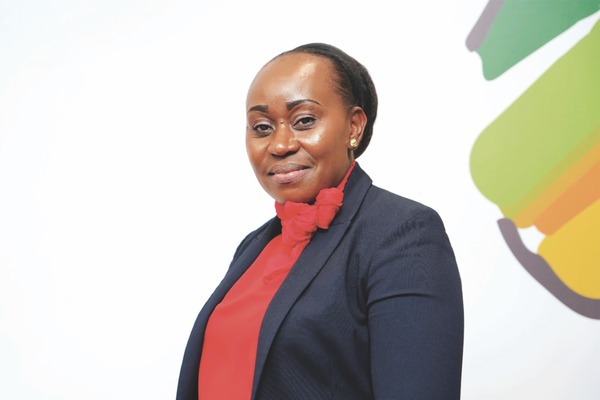
CAROLINE WANJERI KIHARA
DIRECTOR, MORTGAGE BUSINESS KCB BANK KENYA LIMITED
Reframing the Mortgage Market for a Changing Kenya
Kenya’s mortgage market has long carried a difficult contradiction. The aspiration for home ownership is widespread, yet access to formal housing finance remains concentrated among people with predictable salaries, established credit histories and conventional proof of income.
For millions of entrepreneurs, informal-sector workers and members of the rapidly expanding gig economy, earning an income is not necessarily the same thing as being able to document it in the format traditionally demanded by a mortgage lender. It is against this structural challenge that Caroline Wanjeri Kihara’s current role at KCB Bank Kenya assumes particular significance.
As Director, Mortgage Business, Kihara is helping steer one of Kenya’s largest banking institutions towards a broader interpretation of who can qualify for home finance. Her approach combines long experience in mortgage lending with recognition that Kenya’s economy has changed faster than some of the traditional models used to finance home ownership.
Kihara is a senior banking and mortgage-finance professional with more than 19 years’ experience in real estate and mortgage financing. Her career has included senior management positions at Housing Finance, Standard Chartered Bank, Equity Bank and KCB. She is a Certified Public Accountant (CPA-K) from Strathmore University and holds a Bachelor of Arts degree in Mathematics and Business Studies from Kenyatta University. She is also associated with professional bodies including ICPAK and the Association of Women Accountants of Kenya.

Wanjeri has been with KCB cumulatively for 14 years and previously served as Chief of Party at KCB Foundation before returning to lead the mortgage business.
That combination of specialist experience and institutional knowledge is increasingly relevant as Kenya searches for practical ways to expand home ownership without compromising responsible lending. From the conventional borrower to the real Kenyan economy, one of the most significant aspects of Kihara’s current leadership agenda is the attempt to broaden mortgage finance beyond the traditionally bankable customer. In 2026, KCB announced a mortgage approach aimed at small-business owners and workers in less formalised segments of the economy, including traders, artisans and gig-economy workers. Instead of depending exclusively on conventional employment documentation, the approach considers evidence such as mobile-money transactions, bank statements, savings behaviour and consistency of cash flows.
This represents more than a product adjustment. It reflects a fundamental question facing Kenya’s financial sector: how should a bank measure the ability of a customer to repay when that customer does not have a conventional payslip? For years, salaried employment has provided one of the clearest indicators used in mortgage underwriting. Yet Kenya’s economy includes millions of people who generate income through businesses, professional practices, farming, digital work, informal trade and multiple income streams. Kihara’s approach recognises that the absence of a traditional payslip does not automatically mean the absence of financial capacity. The challenge for a lender is to distinguish irregular income from unreliable income. That requires better information, stronger analysis and appropriate risk controls. KCB’s 2026 mortgage initiative reflects this shift, with the bank stating that it intends to assess business performance and financial behaviour alongside more conventional indicators.
Kihara’s influence also extends beyond the immediate boundaries of banking. She serves as a Board Director of the Kenya Property Developers Association and sits on the Land Sector Board Committee of the Kenya Private Sector Alliance. The bank also credits her with playing a critical role in the taskforce that developed guidelines for electronic registration of land transactions under the National Land Management Information System associated with ArdhiSasa.
These engagements put her at the intersection of banking, property development, land administration and private-sector policy. That intersection matters because the affordability of a mortgage is not determined by the interest rate alone. The cost of land, construction, infrastructure, documentation, property valuation and the availability of suitable housing all influence the amount ultimately required from a household. KCB’s mortgage offering itself illustrates the increasingly diversified nature of the market. Its residential mortgage proposition accommodates purchasing a completed home, buying land and building, construction on an existing plot and other forms of property finance. The bank also considers different income streams, including employment, business and rental income, when assessing repayment ability.
The implication is important: mortgage leadership increasingly requires an understanding of the entire housing value chain rather than simply the mechanics of issuing loans.
Kihara’s career also demonstrates the value of specialist institutional experience at a time when mortgage lending requires a careful balance between growth and risk.

Kihara’s experience is better captured by an article in the Business Daily that opined that KCB brought Kihara back to the mortgage business after her period leading KCB Foundation. She had previously headed the mortgage business from June 2015 to October 2020. The move formed part of a renewed effort by the bank to place the mortgage portfolio under experienced specialist management.
The significance of that experience extends beyond longevity. Mortgage lending involves unusually long-term relationships between banks and customers. Decisions made at origination can remain relevant for 10, 15, 20 or even 25 years. Effective mortgage leadership therefore requires not only the ability to grow the portfolio but also the discipline to understand affordability, collateral, repayment patterns and changing economic conditions. Kihara’s current mandate consequently sits at the intersection of market expansion and credit discipline.
Another notable element of Kihara’s recent work has been the effort to change how potential homeowners think about affordability. In 2026, KCB partnered with Centum Real Estate to provide mortgage financing linked to residential developments, with a focus on fixed-rate financing and more predictable monthly repayments. Kihara argued that potential homeowners can be discouraged when they encounter the headline price of a property without considering what the corresponding monthly payment could mean for their household budget. This is a subtle but important shift in the customer conversation. Rather than presenting home ownership principally as a question of whether someone can raise several million shillings, the financing discussion can begin with a more practical question: what monthly commitment can the household sustainably afford? That approach does not eliminate the affordability challenge, but it changes how financial institutions can engage customers and structure products around their circumstances.
Kihara represents a form of C-suite leadership that is less about personal visibility and more about changing how an important financial service works. Her professional record spans mortgage finance, mainstream banking, property-sector engagement, financial inclusion and institutional leadership. Her current responsibilities at KCB place her directly within one of Kenya’s most persistent economic challenges: expanding access to affordable housing while ensuring that mortgage finance remains commercially and financially sustainable. The emerging mortgage model she is helping shape recognises that the next generation of homeowners will not all arrive with conventional employment contracts. Some will be entrepreneurs. Others will earn through digital platforms, small businesses, professional practices, farming or several income streams simultaneously. The financial sector therefore faces a fundamental challenge: developing the technology, data and credit-assessment capabilities required to understand these customers without weakening lending standards. That is where Caroline Wanjeri Kihara’s experience becomes particularly relevant. Her contribution to the future of Kenyan business is not simply about expanding a mortgage portfolio. It is about helping rethink the relationship between income, creditworthiness, financial information and home ownership. In an economy undergoing profound structural change, that is a business challenge with consequences well beyond banking. It is also why Kihara’s work merits consideration in Business Monthly EA’s Top 20 C-Suite Leaders Shaping the Future of Business 2027—not merely for the position she occupies, but for the changing model of mortgage finance she is helping develop.