#20
KENYA PIPELINE CORPORATION (KPC) FOUNDATION
The Other Journey of Kenya Pipeline: The Quiet Work Happening Beyond the Pipes
Most infrastructure disappears into the background. We notice it only when it fails. Electricity during a blackout. Water when the taps run dry. Fuel when queues begin forming at petrol stations.
The Kenya Pipeline Company is one of those invisible systems. Every day, petroleum products travel hundreds of kilometres beneath the country, connecting Mombasa to towns and cities across Kenya. Few people think about the network beneath their feet, and fewer still know that alongside those pipelines runs another kind of investment, one measured not in kilometres, but in classrooms, clean water and second chances.
That work belongs to the KPC Foundation.
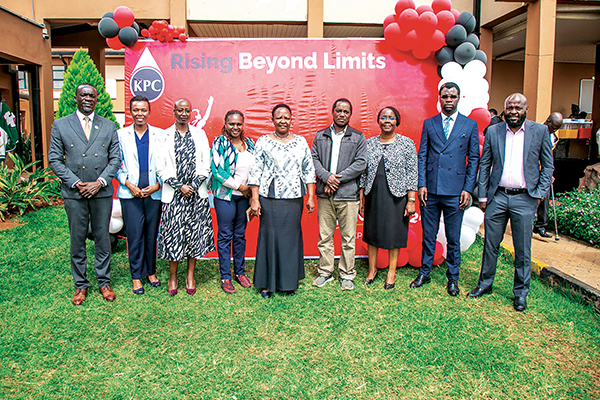
Established in 2016 and later registered as a charitable trust in 2023, the Foundation was created as the social impact arm of the Kenya Pipeline Company. While the corporation keeps fuel moving across the country, the Foundation focuses on the communities that live along that same route, supporting projects in education, healthcare, water, environmental conservation and community development.
If there is one programme that captures its purpose, it is Inuka. The name means “rise up,” and for hundreds of young Kenyans living with disabilities, that is exactly what the scholarship has made possible.

Every year since 2016, the Foundation has sponsored one girl and one boy with disabilities from each of Kenya’s 47 counties. The scholarship recognises a reality that often receives too little attention. Many children with disabilities continue to face significant barriers to education, not because they lack ability, but because the support they need is often out of reach. The Foundation chose to respond with something broader than financial assistance.
Recipients receive school fees, uniforms, assistive devices, mentorship and psychosocial support, reflecting the understanding that success in school depends on much more than paying tuition. By the end of 2025, more than 700 students had benefited from the programme, supported through an investment of more than KSh 100 million. The journey does not necessarily end with secondary school.
Recognising that higher education presents another hurdle, the Foundation introduced Inuka Plus in 2024 to support outstanding graduates as they move into universities, colleges and technical institutions. It is an extension of the same idea that has shaped the scholarship from the beginning: meaningful opportunity should not end at graduation. Education is only one part of the story.
Across communities served by the Kenya Pipeline network, the Foundation has invested in projects that respond to local needs as they emerge. Health outreach programmes have reached underserved areas through medical camps, while hospitals have received equipment including intensive care beds, X-ray machines and ultrasound technology in support of improved healthcare services.
Access to clean water has received similar attention. The Foundation has drilled boreholes in communities including Akithii Girls Secondary School, Kiboko Maasai Ranches and Thange, while also providing water tanks to schools and markets located along the pipeline corridor. These projects may appear modest on paper, but reliable access to water often changes everyday life in ways that are difficult to measure, saving time, improving health and easing the burden on families.
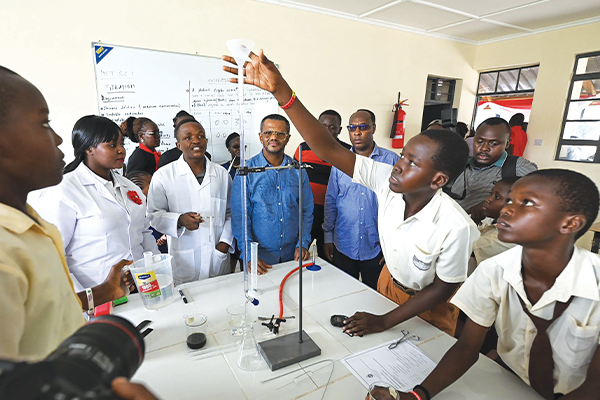
The same practical approach can be seen in the buildings the Foundation has helped bring to life. More than 38 facilities, including classrooms, science laboratories, dormitories and administration blocks, have been built or supported in different parts of the country. Among the most recent is a modern science laboratory at Muruguru Junior Secondary School in Nyeri County, creating new opportunities for students to learn through practical experimentation.
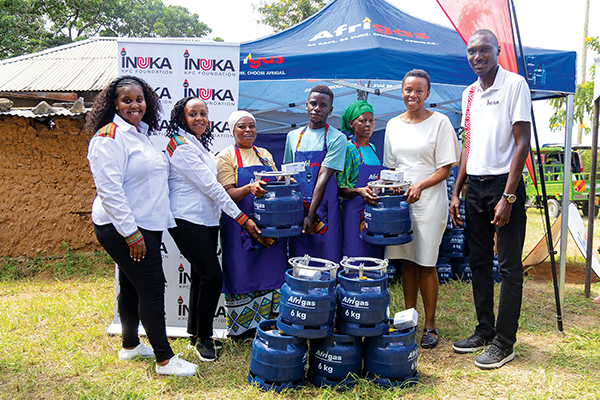
More recently, the Foundation has begun looking ahead to challenges that extend beyond traditional community projects. Working with Vivo Energy Kenya, it introduced a Clean Energy Transition Programme that provides LPG starter kits to households in Nairobi’s Viwandani area, encouraging the use of cleaner cooking fuels. At the same time, it has expanded into digital skills through the Inuka Tech Fellowship, developed with PLP Africa and JHUB Africa to equip young people with training in artificial intelligence, programming, data analytics and innovation.
Taken together, these initiatives tell a story that is easy to overlook. The Kenya Pipeline Company was established to move fuel safely and efficiently across the country. Its Foundation exists for a different purpose. It invests in people whose futures can be transformed by access to education, healthcare, clean water and new skills. Perhaps that is why the Foundation’s work rarely makes the loudest headlines.
A scholarship awarded to one student. A borehole completed in one community. A laboratory opened at one school. Individually, they are small moments. Together, they reveal another kind of national infrastructure, one that is built not from steel or pipelines, but from opportunity.