#3
SAMANTHA KIPURY
JOINT CEO DENTSU KENYA
BUILDING A BUSINESS WHERE MARKETING MEETS COMMERCIAL PERFORMANCE
In a business environment where companies must compete for consumer attention, defend market share and demonstrate returns on every shilling invested, marketing leadership has become a strategic business function rather than a communications exercise. Samantha Kipury, Co-CEO of Dentsu Kenya, has built her career around this intersection of consumer understanding, media strategy and commercial performance.
Her professional journey is particularly instructive because she has experienced the business from the ground up. Rather than entering executive leadership solely through a corporate management career, Samantha helped establish and grow an agency business, navigating the uncertainty of entrepreneurship before assuming a leading role in an integrated marketing communications organisation. That experience provides a distinctive perspective on what businesses need from their marketing partners: not simply attractive campaigns, but a clearer understanding of customers, more effective use of resources and communication strategies capable of contributing to measurable business outcomes.
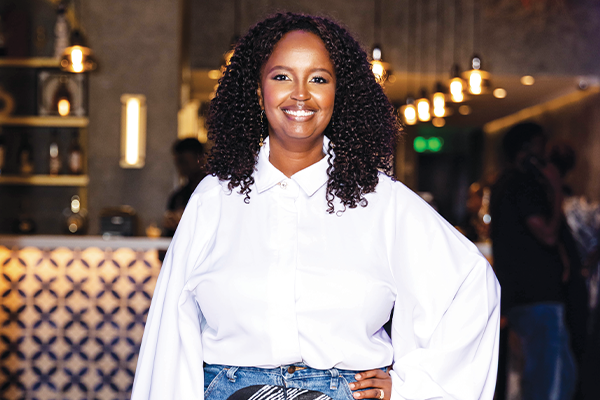
From entrepreneurial beginnings to executive leadership, Samantha founded the business that would become Dentsu Kenya in 2010, initially operating under the Carat brand. The undertaking began modestly, with Nokia as its first client, and developed into a broader enterprise through client relationships, strategic planning and the gradual expansion of its capabilities.
Her early experience was formative. Establishing an agency required more than professional knowledge of media and communications. It demanded the ability to win business, manage costs, deliver client commitments and build confidence in a relatively young organisation competing against established industry players.
In an interview published by Citizen Digital in October 2022, Samantha recalled the difficulties of establishing herself in an industry where she was considerably younger than many of its established decision-makers and industry icons. She also described pursuing an MBA while learning the practical demands of running a business. These experiences matter because entrepreneurship imposes a different discipline from managing an established organisation.
A founder must continually justify the business’s existence to clients, employees and commercial partners. Reputation is wholly earned through delivery, while growth depends on balancing ambition with the capacity to execute.
Over time, the business expanded beyond its original media focus into a wider integrated marketing communications offering. Dentsu Kenya’s capabilities have encompassed areas including media, creative services, digital performance, content and customer experience. The significance of this evolution extends beyond the agency itself. Businesses increasingly require coordinated solutions across multiple consumer touchpoints, rather than isolated advertising activities. Building the organisational capabilities to meet that demand requires investment in people, technology, strategy and client relationships. Making marketing accountable to business, Samantha’s leadership is rooted in an important commercial principle: marketing must understand the business outcomes it is expected to support. For companies operating in Kenya’s competitive consumer and financial services markets, the challenge is not merely to generate awareness. Organisations must acquire customers, retain them, differentiate their products and protect their profitability. Marketing decisions therefore have implications for revenue, customer acquisition costs, brand preference and long-term competitiveness.

Samantha’s leadership experience emphasises integrated marketing communications, media and high-performance team management. Her work has involved major corporate clients, including Isuzu East Africa, Safaricom, Diageo, Standard Chartered, Absa and The Coca-Cola Company.
Serving sophisticated corporate clients requires an understanding of different commercial objectives, consumer groups and competitive conditions. A strategy suitable for a telecommunications company seeking customer growth may differ substantially from one designed for a financial institution building trust or a consumer brand defending its market position. The executive challenge is to translate these differences into appropriate decisions about audience targeting, media investment, creative execution and measurement. This is increasingly important as digital platforms generate extensive information about consumer behaviour. Data can help businesses understand what customers respond to, identify inefficiencies and refine campaigns. But data is valuable only when it informs better decisions. The leadership task is to combine analytical evidence with commercial judgement, creativity and an understanding of the market. For Samantha, the opportunity lies in making these capabilities work together so that communication serves a defined business purpose.
Leading through a changing industry
The marketing communications industry is being reshaped by digital media, changing consumer expectations and the growing demand for accountability. Traditional distinctions between advertising, media planning, content and customer experience have become less rigid. Clients increasingly expect their agencies to understand how consumers discover products, compare alternatives, make purchasing decisions and interact with brands after the sale. This places a premium on integrated thinking and the ability to connect different disciplines around a common objective. Samantha’s experience in building an integrated agency business is relevant to this transition.
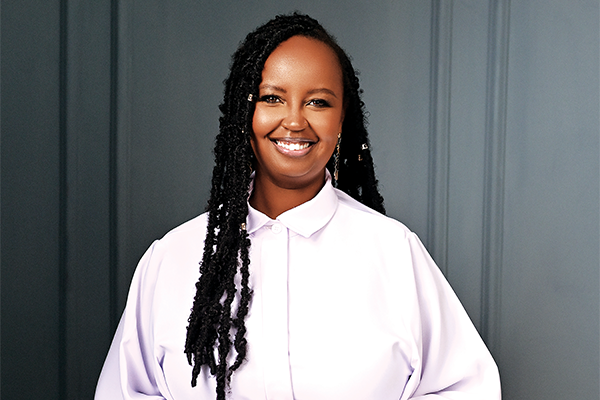
Expanding from a specialist media operation into a broader communications organisation requires a different operating model, with teams that can collaborate across disciplines while maintaining clear accountability for results. It also creates management challenges. Broader service offerings require appropriate talent, investment and coordination. Growth must be supported by the capacity to deliver consistently, particularly when clients operate across different markets or expect increasingly sophisticated solutions. The executive test is therefore not simply whether an organisation can offer more services, but whether those services combine to create greater value for clients.
Samantha’s professional honours and awards, reflects her standing within the marketing industry. Such recognition provides context for her career, although the more substantial measure of leadership remains the organisation’s ability to sustain client confidence, develop talent and adapt to market change. Her progression from founder to co-CEO gives her a perspective shaped by both the risks of building a business and the responsibilities of leading an established organisation. For Business Monthly EA’s Top 20 C-Suite Leaders Shaping the Future of Business, her recognition rests on this combination of entrepreneurial initiative, strategic marketing experience and executive responsibility. Her career illustrates an important principle for contemporary business: competitive advantage increasingly depends on understanding customers, aligning capabilities and ensuring that strategy produces results. In that sense, Samantha represents a form of leadership that connects creativity with commercial discipline. The challenge ahead is to keep strengthening that connection as technology, consumer behaviour and client expectations continue to change. Her journey is a reminder that building a business is only the first achievement. The enduring test of leadership is whether the organisation can continue to evolve, create value for its clients and develop the people who will sustain its next phase of growth.