#12
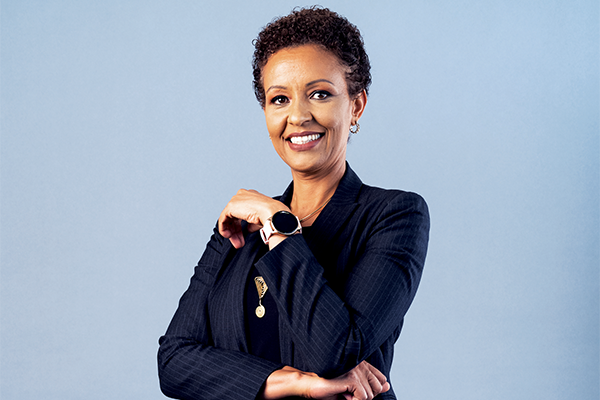
WINNIE HUNJA
DIRECTOR, CORPORATE & INSTITUTIONAL BANKING
I&M BANK
In East Africa’s fast-evolving business landscape, capital is more than a financial resource; it is a catalyst for expansion, resilience and regional ambition. Behind every major corporate transaction, cross-border trade flow or institutional investment decision is a banking relationship that must combine insight, speed, discipline and trust. This is the space in which Winnie Hunja has built her career — at the intersection of enterprise, finance and long-term client partnership.
For more than two decades, Hunja has helped shape this part of the financial-services landscape at I&M Bank. Today, as Director of Corporate & Institutional Banking, she leads one of the institution’s most strategically important business areas, supporting corporate and institutional clients whose financing, transaction and investment needs are central to economic activity across the region.
Hunja joined I&M Bank in September 2004. She holds a Bachelor of Business Administration & Accounting and a Master of Business Administration & Entrepreneurship.
Her long tenure at the bank provides an important perspective on the transformation of I&M’s business. She has progressed through a period in which corporate banking has moved well beyond conventional lending towards a broader model encompassing cash management, trade finance, digital transaction platforms, foreign exchange, investment services and structured financial solutions. That evolution is particularly relevant to the CIB function she now leads. I&M Bank’s business offering to corporates and institutions includes financing for working capital, asset acquisition, business expansion, construction and real-estate development, as well as agricultural production and processing. The bank also provides trade-finance, foreign-exchange, payments and cash-management solutions designed around the operational needs of businesses.
The strategic challenge for a CIB leader is to connect these capabilities to the actual needs of clients. A growing company may require working capital today, trade-finance facilities as it expands into international markets and investment or treasury services as its financial sophistication increases. The bank’s role is to remain relevant as that client evolves. This relationship-based approach has become increasingly important as African businesses become more interconnected across borders. I&M Bank operates not only in Kenya but also through banking subsidiaries in Tanzania, Rwanda and Mauritius, giving its corporate and institutional franchise a regional dimension.
Recent developments at I&M Bank demonstrate the increasing importance of technology to this proposition. The bank’s corporate digital-banking platform, I&M OTG – Business, enables organisations to manage accounts, authorise payments and process local and international transactions through digital channels. The system incorporates multi-level authorisation and maker-checker controls, reflecting the growing importance of efficiency alongside financial security.
Hunja’s current role also comes at a time when the bank is seeking to deepen its support for trade and business activity across the region. In September 2026, I&M Bank announced a partnership with Surecomp to modernise its trade-finance operations, beginning in Kenya before extending to Tanzania, Rwanda and Bank One in Mauritius. The initiative is intended to streamline processes, improve turnaround times and provide a more seamless experience for businesses trading across markets. Hunja was among the I&M Bank leaders associated with the initiative.
The development illustrates how the corporate-banking proposition is changing. Trade finance is no longer simply a back-office function involving letters of credit and guarantees. Increasingly, clients expect faster processing, digital connectivity and visibility across transactions and markets. For a CIB executive, this creates a dual responsibility: maintaining the relationship-based understanding that has traditionally distinguished corporate banking while embracing technology capable of making those relationships more productive. Hunja’s own career progression within I&M gives her a particularly long view of that transformation. Having joined the institution in 2004, she has experienced the evolution of the bank from an established Kenyan financial institution into a regional banking group with increasingly sophisticated digital and corporate capabilities.
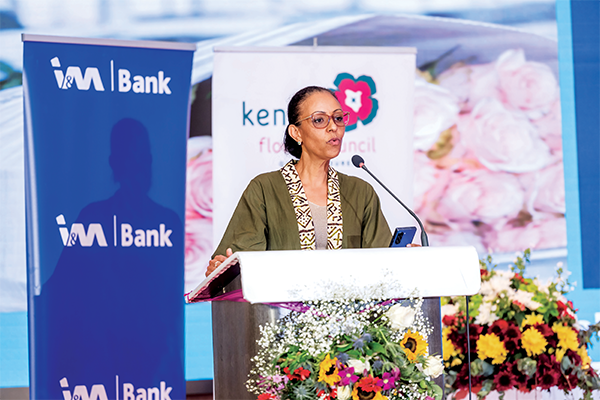
Her leadership role was also visible in September 2026 when she participated as a speaker at the Kenya Flower Council Pinnacle Awards, where I&M Bank was an official sponsor. The bank undertook to address strategic financial solutions, institutional support and market insights relevant to the floriculture industry, an important export-oriented sector of Kenya’s economy. That engagement illustrates another dimension of corporate banking leadership: understanding individual sectors rather than treating corporate clients as a single category. Different industries face different working-capital cycles, foreign-exchange exposures, investment requirements and market risks. The ability to understand those distinctions is fundamental to developing relevant financial solutions.
Hunja’s professional story is consequently one of sustained progression within a banking institution undergoing significant change. Her more than 20 years at I&M Bank have coincided with the expansion of corporate banking from traditional credit provision into a broader ecosystem of financing, payments, trade, treasury and digitally enabled financial services. As Director of Corporate & Institutional Banking, her responsibility is to translate that capability into relationships and solutions that support clients while contributing to the bank’s own growth objectives. The significance of her role lies in this intersection between capital, commerce and relationships.
Corporate banking ultimately exists to help businesses and institutions finance activity, manage liquidity, conduct transactions and pursue opportunities. The effectiveness of the function depends on understanding both the financial requirements of clients and the economic environments in which they operate. Winnie Hunja’s career at I&M Bank represents the increasingly strategic character of corporate banking leadership. Her contribution to I&M’s growth is therefore best understood not simply through the title she holds, but through the expanding role of corporate and institutional banking itself: connecting financial capability with the ambitions of businesses and institutions operating in an increasingly integrated East African economy.