By Dr Hanningtone Gaya PhD, EBS, Former Chairman- Brand Kenya
Don’t bite the hand that feeds you, states a classic idiom that we ought to be all aware of. Kenya may not be perfect, but without Kenya, Somalia as a country would not be existing, let alone having the audacity, legal and diplomatic capacity to take any issue anywhere, let alone having access as a recognized sovereign state, to the International Court of Justice (ICJ) in the Hague, Netherlands.
Founded on 26 June 1945, in San Francisco, California, United States, the ICJ, also called the World Court, is the principal organ of the United Nations (UN), whose primary functions are to settle international legal disputes submitted by states and give advisory opinions on legal issues referred to it by authorized UN organs and specialized agencies.
Without Kenya, Somalia would not be existing as an independent state, worrying about international and strategic issues like maritime boundaries. Somalia would be worrying about basic necessities like food, water and medicine for its citizens.
Somalia and its friends ought, therefore, to take cognisance of this simple fact and unconditionally withdraw its claim on Kenya’s maritime territory, even as a selfish, self-serving survival strategy.
It is not lost to the world that if there is a country that has sacrificed emotionally, politically, economically and even socially, to ensure a free, liveable and stable Somalia, that country is Kenya. When the world turned its back on the then war-torn Somalia, Kenya stood with what was left in the territory, including opening its borders in an act of humanitarian effort to shelter, feed, clothe and treat the fleeing hordes of the Somali people. Hence, the world’s largest and most populated refugee camp, Dadaab.
That Kenya has always chosen the path of good neighbourliness, even under provocative environment, is not a reason to imagine that Kenya cannot flex its muscle, if push comes to shove. For instance, what would prevent Kenya taking away from the hands of Somalia, its ability to provide the basic necessities Somalia as a country needs to survive? Fortunately, this is not how Kenya rocks. We remain gentlemen and very accommodating as a nation, absorbing all kinds of provocation and occasional insults from all around. We have remained a focused nation, working towards the integration of all nations of Africa.
In the whole of this mix, as responsible nations existing in a global space, let us not forget that good neighbourliness demands that in cases of disputes, both real or imagined, we have instruments, tools and memorandum of understanding (MOU) to turn to in a bid to resolve any issues or disputes, if any, before rushing to the ICJ, unless, of course, one is privy to the possible outcome at the Hague.
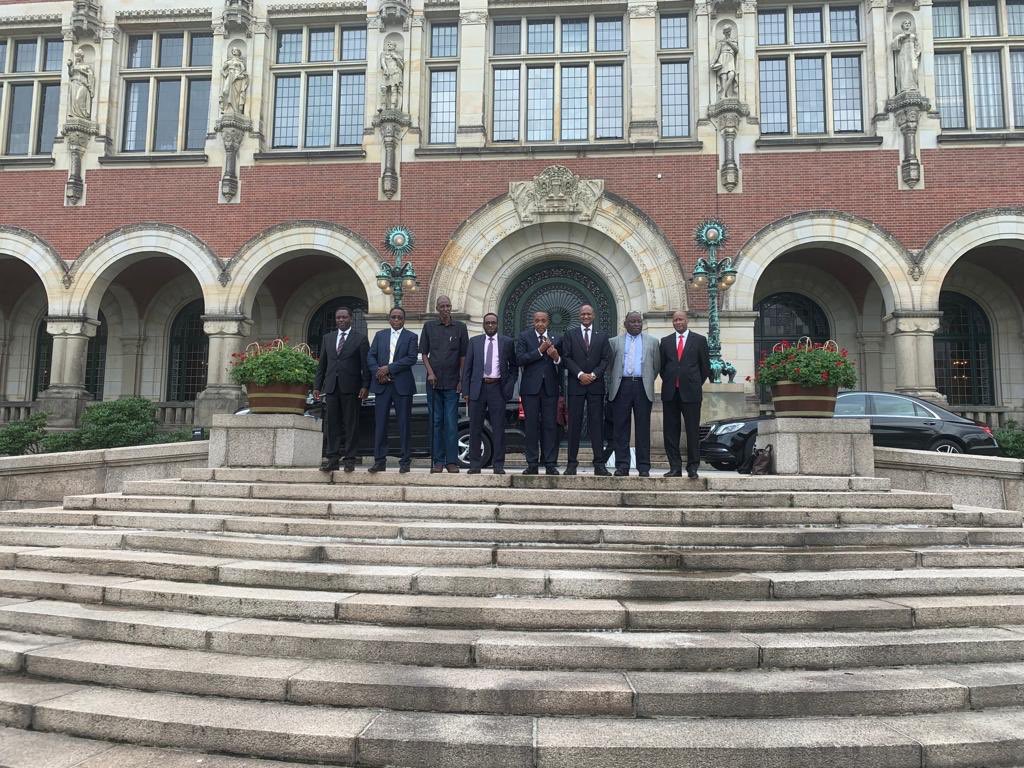
As a country, we feel and know that the upcoming general elections in Somalia, coupled with desperate short-term international commercial interest in the Horn of Africa, are the probable prime movers of the maritime boundary claims, supported by illicit and mischievously redrawn maps that annex a large part of Kenya’s maritime domain to Somalia. If this scenario is true, can Somalia rethink long term and about the sustainability of its claim?
History is replete with examples of Kenya’s reaction to any threats on its territorial boundaries: Uganda’s Amin, for example. In this latest territorial claim, the maritime boundary claim, history is being remade and Kenya must stand up, and be a shaper of this history this time round.
Even at this hour, Somalia has the option of delinking the maritime boundary issue with its domestic affairs. Somalia has also the option of taming the appetite of commercial interests and be worry of the role of the private firms in accentuating strategic issues in the Indian Ocean and beyond.
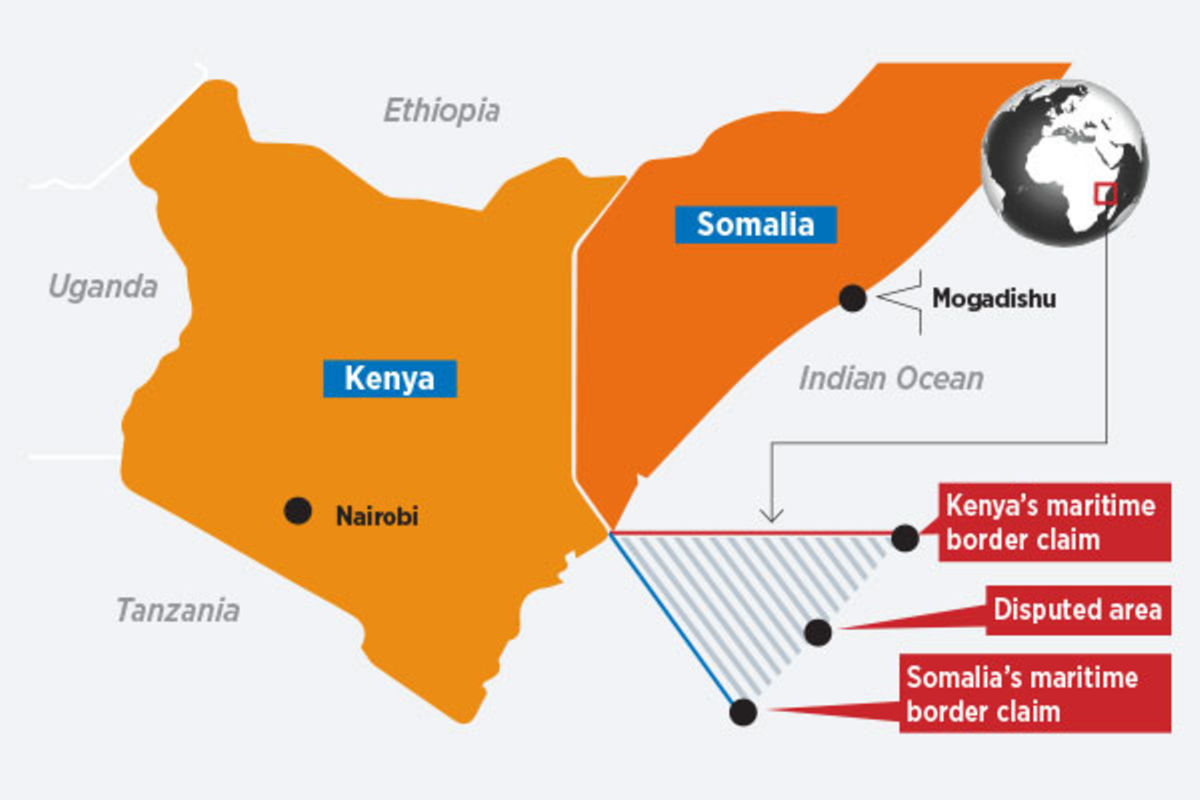
As Kenyans, we cannot remain docile as the level of military footprint in the neighbouring waters is growing as never before and every big power exercising its influence in the Indian Ocean and the surrounding waters. Neither can we remain docile as the Somalia maritime boundary claim plays back to our own domestic politics. This illegal claim and act of provocation, is a Kenya issue that both the elite and Wanjiku should prosecute with sense of purpose and nationhood. It is not a government alone fight—but a threat to the essence of Kenya’s nationhood and identity, and therefore every Kenyans fight!
Kenyans must see this maritime boundary claim for what it is: it is not a dispute; it is an act of aggression. We are being made the collateral damage as a part of Somalia’s domestic politics, around the forthcoming general elections and fuelled by short term and naïve international commercial interests.
The only exit is for Somalia to withdraw the unacceptable illegal maps that annex a large part of Kenya’s maritime domain to Somalia.
Kenya will not yield not an inch less of its territory.
Dr Hanningtone Gaya is a past chairman of the Media Owners Association of Kenya and the Brand Kenya Board