#10
ABSA KENYA FOUNDATION
Building Community Beyond Banking
Something meaningful occurs when a bank decides to invest in the communities that support it, rather than just its financial sheet. That is precisely the narrative of the Absa Kenya Foundation (AKF), a bold, organized commitment by Absa Bank Kenya PLC to achieve long-term social and environmental transformation throughout the country.
The Foundation, which was launched in October 2024 at Karura Forest in Nairobi, is one of the most substantial corporate social investments in Kenya’s financial sector in recent years. Absa backed up its commitment to the Foundation with an initial guarantee to set aside 1.5% of the bank’s annual earnings into the program.
For many businesses, corporate social responsibility is really an afterthought, a line item in the annual report. The Absa Kenya Foundation is constituted differently. It was created from the ground up as a specialized social arm, independent of the bank’s commercial operations, with its own identity, governance, and programmatic focus.
The Foundation is structured around four pillars: entrepreneurship, education and skills, natural resource management, and health and humanitarian relief. These aren’t arbitrary decisions. They represent a detailed understanding of Kenya’s most critical development concerns, including the youth unemployment crisis, the mounting effects of climate change, gaps in healthcare access, and small enterprises’ ongoing battle to survive and thrive.
Kenya’s micro, small, and medium enterprise (MSME) sector drives the economy, providing a large share of jobs and livelihoods. However, many entrepreneurs, particularly women, young people, and people with disabilities, continue to lack access to funding, business skills, and mentoring.
The Foundation’s entrepreneurial pillar addresses this difficulty straight on. Over a five-year period, it hopes to empower 50,000 MSMEs across the country. What distinguishes this commitment is its explicit emphasis on inclusion: the target population is 60% women, 30% men, 10% youth, and 5% people with disabilities. An additional 10% of entrepreneurship efforts will go into agriculture, recognizing that Kenya’s rural economy cannot be left behind.
This is not a vague goal. It represents a recognition that financial inclusion must be combined with capacity building, that just providing a loan without accompanying knowledge and coaching rarely moves the needle for small business owners.
The education and skills pillar are possibly the most ambitious in terms of sheer scope. The Foundation’s Ready-to-Work initiative aims to reach one million Kenyan youngsters, a figure that represents both the country’s youth unemployment crisis and Absa’s goal.
Beyond the headline figure, the programs under this pillar are intended to develop practical, future-oriented skills. The Absa Fellowship Program will support 50,000 young people, while 500 STEM scholarships will be offered to students who would not otherwise have access to such opportunities. The fundamental principle is clear: Kenya’s next generation must be prepared not only with academic qualifications, but also with the skills that the modern economy requires.
In a society where youth unemployment stays persistently high and the gap between what schools teach and what companies require becomes wider; this type of structured, industry-led skills investment is exactly what is required.

The natural resource management pillar places the Foundation squarely in Kenya’s broader environmental discourse. Climate change is no longer a distant threat, it is a present reality for Kenyan farmers, pastoralists, and coastal people. Erratic rainfall, rising temperatures, and land degradation are already affecting livelihoods in ways that traditional financial instruments cannot address.
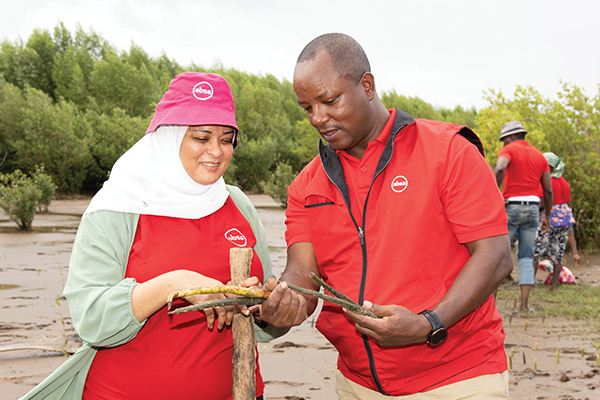
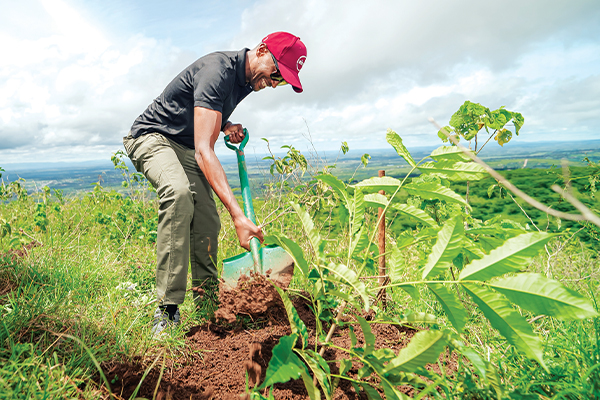
The Foundation’s answer is multilayered. Programs in climate-smart agriculture, renewable energy, tree planting, and tree growing comprise the foundation of this pillar. The headline pledge, planting 10 million trees, is remarkable, but it falls inside a bigger vision to advocate for low-carbon, climate-resilient development in conjunction with youth, SMEs, and other stakeholders.
The health and humanitarian relief pillar, on the other hand, demonstrates a distinct type of responsibility: the willingness to respond when things go wrong. The Foundation will collaborate with development partners and healthcare professionals to tackle health issues and promote preventative care. Most importantly, it will be prepared to respond to humanitarian catastrophes such as floods and famine, which are becoming more common and severe in Kenya. This pillar acknowledges that a bank with deep connections in communities cannot simply sit on the sidelines during times of crisis. It is a commitment to show up.
The establishment of the Absa Kenya Foundation places the bank in the company of organizations that have recognized an essential fact: that long-term commercial success and community well-being are not mutually exclusive goals. They are, in fact, intricately linked.
Ultimately, the Foundation represents a bank that chooses to think in terms of generations rather than quarters. And that is a commitment that Kenyan communities should pay special attention to.