#12
OLD MUTUAL
FROM RECOVERY TO GROWTH
Going by the 2025 Financial Results, Old Mutual is in a stronger position than it has been in years. FY 2025 is the crown in a jewel of the last three consecutive years of sustained profitability after a KES 1.98B loss in 2022. The 2025 FY Results indicate double-digit growth across pure general insurance, corporate life and asset management, with a KES 856 M profit after tax.

These results also indicate improved cash generation and a stronger balance sheet, thanks to a leadership team executing with clarity and confidence under Group CEO Arthur Oginga. The Old Mutual C-Suite has displayed a strategic vision anchored in innovation, digitisation, and long-term value creation.
According to the team, East Africa remains one of the most promising regions for financial services growth – driven by a young population, an expanding middle class, and rising demand for wealth and health protection, savings, and investment solutions. Old Mutual is positioned to meet that moment while remaining alert to face the challenges ahead, occasioned by geopolitical uncertainties, climate change, and macroeconomic pressures. Under the CEO Arthur Oginga and Chairman, Dr. Habil Olaka, the Old Mutual Board boasts the capacity and capabilities to navigate through the large minefield of risks through capital discipline, leveraging on technology and other financial management tools.

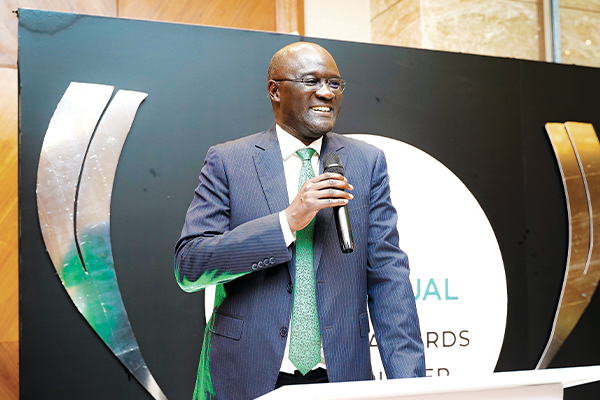
Quoting Dr. Olaka, on the occasion of the investor briefing, Old Mutual is building on 180 years of heritage while shaping the future. ‘That is not a small thing. That is a responsibility we carry with pride. Old Mutual is moving forward – with purpose, with discipline, and with you,’ Dr. Olaka added.
Asset Management and fee-based income is the growth engine for Old Mutual, with fees rising by 34.4% in 2025, with the core client base mainly in the mid to high income and investment base.
As Old Mutual exits real estate and weak insurance lines, the firm is placing heavy investments on digital platforms in addition to asset management in terms of new strategic orientation, in addition to consolidating operations. In a nutshell, Old Mutual is shedding its core identity as an insurer to a financial services group, where it remains a very strong brand despite the transitions and progressively exiting underperforming lines by mainly repositioning away from its historically core insurance business.
So far, the new business model or strategy is coherent: simplify the business and grow fee-based income. What remains to be seen is the execution, especially in the presence of rising operational costs. In FY 2025, operating expenses rose sharply, eroding much of its income gains, although this is usually a classic risk of transformation: restructuring costs accumulate before efficiencies materialise.
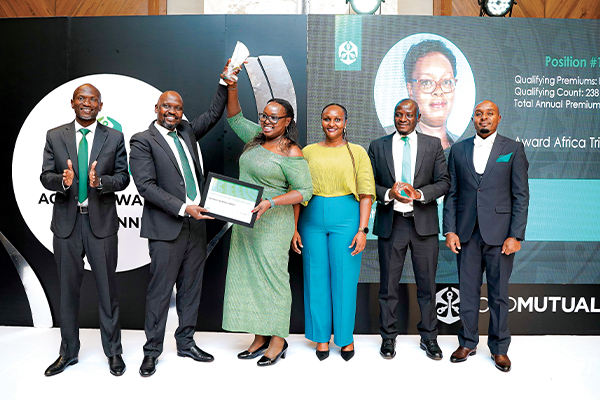
In terms of who owns the customer, Old Mutual sits in the mid-to-upper segment, increasingly oriented toward investment clients rather than traditional policyholders, a segment that represent different needs, behaviours, and time horizons.
If 2025 were a scoreboard, Old Mutual is mid-transition and the biggest challenge to the board is to complete the transformation into a leaner, investment-led firm without losing the resilience that once defined the financial services firm.