#6
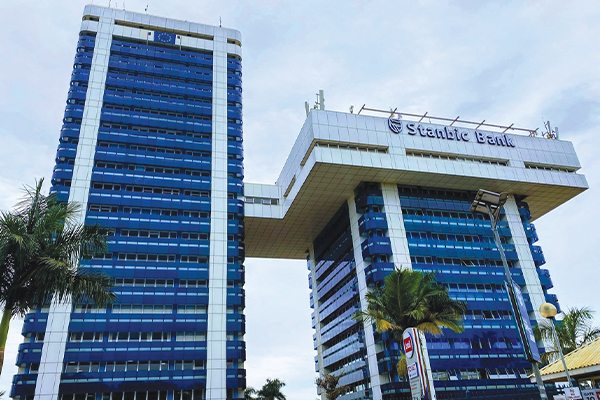
STANBIC BANK
In a digital, rapidly evolving market, Stanbic is reshaping the consumer experience by reducing friction, improving transparency and strengthening service consistency across everyday banking and more complex financial needs.
In Kenya, where customers increasingly expect instant payments, real-time updates and seamless digital journeys, Stanbic Bank Kenya is focusing on experience as a differentiator. The emphasis is on simplifying common tasks and strengthening the operational backbone that keeps service consistent.
With 44 branches and service centres, 135 ATMs/CDMs and more than 315,000 clients, Stanbic combines digital delivery with a physical footprint. It says it has redesigned customer journeys to reduce friction, increase transparency and improve end-to-end service reliability. In the past two years, the bank upgraded its core banking system and enhanced its omnichannel experience, which culminated into a 99.8% system uptime and an enhanced client experience.
The bank points to advocacy as a validator. Stanbic reports that its Net Promoter Score (NPS), a widely used measure of customer advocacy, rose 8 per cent year-on-year in 2025. It attributes the increase to continued investment in technology and people, alongside a sharp focus on structuring solutions around the needs of different customer segments.

How the experience is delivered
The bank says it is treating service quality as a management discipline, focusing on training, incentives and the tools staff use to resolve issues quickly. The aim is consistent outcomes across customer types, from salaried retail clients and SMEs to corporates.
A second focus is digital capability. As the industry adopts data science, AI and stronger cyber-defences, Stanbic has expanded technical training so employees can support new products and processes. The bank says this contributes to faster turnaround times, clearer communication and fewer operational errors for customers.
Alongside digital channels, the bank uses a relationship-led model supported by sector specialists to help respond to more complex client needs.
Experience across life stages
The bank operates across Personal and Private Banking, Business and Commercial Banking, Corporate and Investment Banking, and Insurance and Asset Management. Stanbic says this breadth helps it support customers across financial life stages; from daily transactions to business growth, major purchases and longer-term saving and investing.
In Corporate and Investment Banking, Stanbic works with multinationals, domestic corporates, government and parastatals, and institutional investors, with activity concentrated in sectors including energy, transport and trade. The bank asserts that financing these areas supports the infrastructure and supply chains that shape everyday growth for consumers.

The bank has been involved in key transactions including Kenya’s first corporate green bond and East Africa’s first sustainability-linked loan. Over the past year, it facilitated a US$1.5bn Eurobond transaction and arranged the largest corporate green bond, all of which have substantial gains on the economy.
It has also financed energy projects, including Kenya’s oil pipeline systems, supporting more efficient crude oil transport. The bank has financed renewable energy projects as well, aligning with national sustainability priorities under Vision 2030.
The bank has also financed transport infrastructure, including the 27-kilometre Nairobi Expressway from Mlolongo to Westlands. The project has reduced travel times and eased congestion along a key corridor, improving urban mobility for commuters and businesses.
The bank is also investing in platforms aimed at improving transaction experiences for large ecosystems. Kargo Pay, developed for the Kenya Ports Authority (KPA), provides real-time payment and reconciliation. The platform streamlines workflows, strengthens controls that reduce fraud risk and enables traders and logistics firms to make instant payments via a digital wallet linked to virtual accounts.
E-biller, a platform administered by Stanbic, allows clients to maintain post-paid Kenya Power accounts and initiate bulk electricity bill payments, simplifying recurring payment management.
In Business and Commercial Banking, the focus is on SMEs and mid-sized firms across agribusiness, manufacturing, wholesale and trade, TMT and oil and gas. The bank says its ecosystem approach links clients to markets and to larger regional corporates.
The unit also uses innovation to improve speed and certainty in transactions. One example is the Electronic Billboard (EBB), developed with the East Africa Tea Trade Association, which digitised tea auctions by enabling real-time electronic payments and simplifying transactions across the chain. The bank says these and other tailored digital offerings, including in lending, are designed to better match SME needs.
Its D.A.D.A offering, which is tailored to increase access to financing and knowledge for women has disbursed over KES 49.5 billion in loans since inception, helping to advance inclusive growth.
Its asset finance offering includes tenors of up to 72 months, no loan processing fees and access to vetted suppliers, aimed at helping individuals and firms invest in vehicles and equipment without tying up working capital.
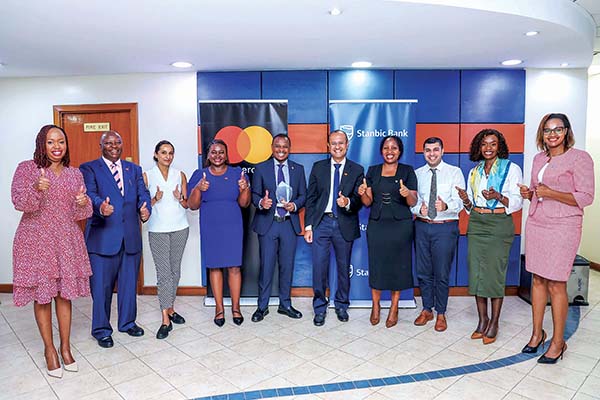
Additionally, the bank’s research, including the Africa Trade Barometer, and curated client matchmaking sessions connect enterprises to trade, supply-chain and growth opportunities across the region.
In 2025, the Kenya Bankers Association ranked Stanbic 4th in MSME lending, an indicator of the scale of its activity in a segment where access to finance remains a constraint.
Personal and Private Banking serves retail and wealth clients with solutions designed to go beyond day-to-day transactions. The segment is supported by bankers, relationship managers and financial advisers, and continues to invest in client relationship management, internal capability and digital platform enhancement. The bank says its omnichannel platform captures real-time feedback, enabling ongoing refinement and personalisation of the customer experience. It has also enhanced its predictive fraud-monitoring capability designed to detect and prevent threats in real time.
The Bank has been named Best Private Bank in Kenya by Global Finance for the past two years, with the bank’s advisory and offshore offerings well positioned to support regional and global investment needs.
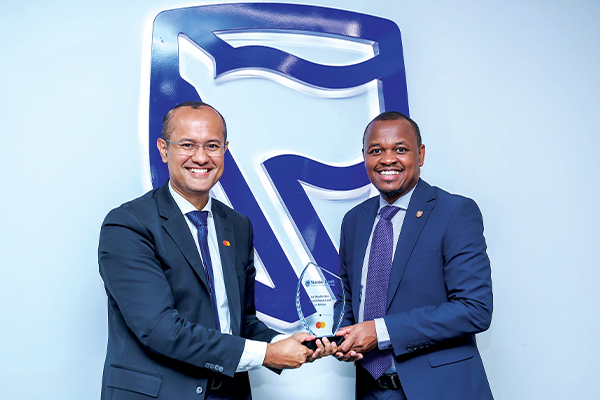
The bank was first in the market to introduce the Mastercard World Elite Credit Card, expanding its premium card offering and affirming its commitment to exposing clients to superior experiences. This also extends to distinct experiences including the annual music concert which features top notch, international and local talent.
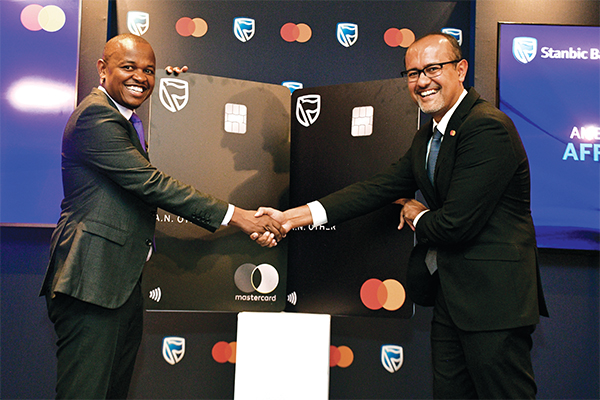
Other retail offerings include affordable housing finance, market schemes and workplace banking, designed around client needs. The bank reports mortgage disbursements of KES 5 billion in 2025, positioning it as a market leader in home financing.
In Insurance and Asset Management, Stanbic is positioning itself around longer-term savings and investment needs. Assets under management reached KES 5.3bn in 2025, and the bank has expanded Insurance Direct Sales Agents to widen distribution and access. The unit also runs the Stanbic Financial Fitness Academy (FFA), which focuses on financial capability and links clients to solutions aligned to their goals.
The Banks awards in 2025 point to a future focused and market relevant organization. Stanbic was named Best Investment Bank in Kenya by Euromoney, Best Private Bank in Kenya by Global Finance, Best Bank in Mortgage Financing( 2nd Runners up) Best Bank to borrow from (2nd Runners up) by Think Business and EMEA for Best refinancing in Africa for Kenya’s US$1.5bn bond issuance and US$2bn capped tender offer, among others.

As financial services become increasingly commoditised, consumer loyalty will lie in brands that make money management simpler, faster and more dependable. Stanbic Bank Kenya’s focus on journey redesign, omnichannel support and capability building shows how consumer experience is becoming a primary driver of differentiation in banking.