#1
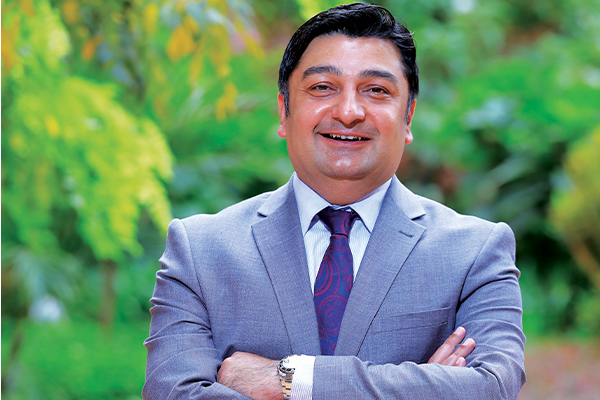
RASHID KHALANI – CEO THE AGA KHAN UNIVERSITY HOSPITAL
Transformational leadership of the Aga Khan University Hospital has existed under different CEOs for nearly seven decades. During this time, the Aga Khan University Hospital (AKUH) has stood as a beacon of medical excellence in East Africa.
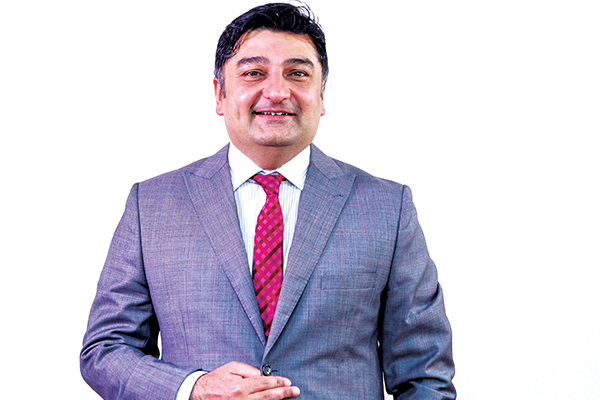
In the last few years, the institution has undergone one of its most strategically ambitious phases—defined by a sharpened focus on quality, a bold expansion of advanced clinical services, and an unwavering commitment to developing the region’s healthcare talent. At the centre of this transformation is its CEO, Rashid Khalani, whose tenure reflects a blend of visionary leadership, operational discipline, and deep institutional loyalty.
Having served previously as the hospital’s CFO, his transition to the CEO role built on a legacy of strength. But rather than simply maintaining momentum, he chose to “press the gas pedal,” as he puts it—accelerating innovation, strengthening clinical standards, and widening access to high-quality care. Raising the bar on quality, he says, is non-negotiable. Under his leadership, AKUH has not only maintained its Joint Commission International (JCI) accreditation—earned in 2013—but raised the threshold by pursuing specialized Clinical Care Program Certifications (CCPC). These certifications recognize excellence in specific, high-risk medical conditions.
AKUH is the second hospital in Africa to earn JCI certification as a Centre of Excellence in Heart Attack Care, and the first hospital in Africa certified for its Acute Stroke Program. More certifications—such as breast cancer and trauma care—are already in the pipeline. These advancements ensure standardized processes across clinical teams and reinforce AKUH’s commitment to continuous improvement.
On affordability, “Quality comes with a price,” he acknowledges. But he also emphasizes that quality provides extraordinary value: consistency, safety, and outcomes that meet global benchmarks. Building capacity for Kenya and the larger East Africa region, is one strategic pillar that defines Rashid Khalani’s leadership. The CEO firmly believes that world-class hospitals are not built primarily on infrastructure, but on people. Politicians, he says, love buildings—but “what happens inside the building matters.” AKUH is the only private teaching hospital in Kenya, hosting under one roof:
• Undergraduate medical training,
• Postgraduate programs, and
• Advanced speciality and subspecialty fellowships.
For instance, in the last four years, the hospital has expanded its fellowship programs to 15 specialties, including cardiology, medical oncology, critical care, hematology, neurology, paediatric neurology, and gastroenterology. The target is to reach 30 fellowships within the next four years. More importantly, AKUH employs 180 full-time faculty members, ensuring clinical consistency and the stability required for high-quality training—reducing moonlighting and strengthening patient care.
CEO Rashid Khalani’s philosophy is clear: If Africa is to stop exporting talent, it must build, retain, and continually develop its own.
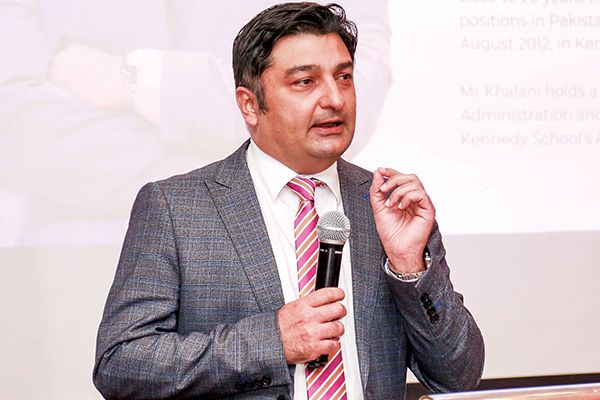
Another notable achievement has been the extension of health care access, in order to take health care closer to as many communities as possible. Under his stewardship, AKUH has expanded aggressively across the country and the EA region. Today, the institution operates three hospitals in Kenya located in Nairobi, Kisumu and Mombasa), and over 90 medical centres across East Africa, including 50 centres under the Nairobi hospital’s network alone. These centres are deliberately structured to remain accessible: overheads are kept minimal and pricing is lower than the main campus—subsidized by Nairobi’s flagship hospital. This is both a strategic and a social mission, improving healthcare access while ensuring long-term sustainability.
In the last four years, the numbers of patients passing through the AKUH speak for themselves. The hospital and its centres collectively serve between 650,000 – 700,000 outpatients annually, and over 17,000 inpatients, with patient volumes rising at a 6% annual growth rate.
The AKUH operates on the basic principles of affordability, patients’ welfare, and financial sustainability since the facility is a not-for-profit institution. Every shilling surplus is reinvested into technology, training, quality improvements, and infrastructure. In addition, the hospital runs a Patient Welfare Programme worth KES 400 million every year, offering treatment to financially constrained patients through a structured, multidisciplinary approval committee. This balance—investment in excellence while expanding affordability—is fundamental to AKUH’s social mandate.
The CEO’s tenure has also been marked with pioneering Advanced Diagnostics and Specialist Care to ensure diagnostics and treatments that previously sent many Kenyans abroad. These include: PSMA PET scans for prostate cancer, Lutetium-177 targeted therapy, Stereotactic Radiosurgery (SRS) and SBRT for precision radiation therapy, Bone marrow and kidney transplant services. Preparations are ongoing for liver transplant programs. The CEO is emphatic: “For kidney transplants, open-heart surgery, vascular surgery, neurosurgery—nobody should need to leave Kenya.” Indeed, the institution is now looking outward, positioning Kenya as a regional medical hub capable of attracting patients from across sub-Saharan Africa.
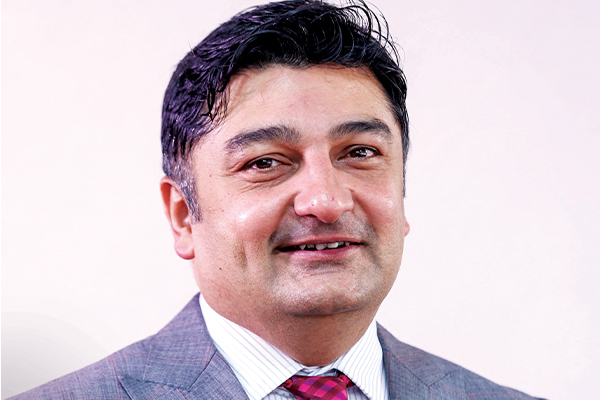
Going forward, Rashid Khalani envisages a situation where the medical world in Kenya would be informed by a clear stand on Medical Standards and Data Accountability in discussing medical errors and public perceptions driven by social media. The CEO offers a businesslike but firm perspective. Human error cannot be eliminated entirely, he says, but quality systems reduce its likelihood significantly. His challenge to the health industry is straightforward: Let the Ministry of Health and regulators mandate the submission of standardized clinical indicators across all hospitals. These ought to include: mortality rates, hospital-acquired infections, ventilator-associated pneumonia cases, and other global clinical benchmarks. Without data, he argues, public discourse is misplaced and often driven by noise rather than fact. Data-driven regulation, audits, and incentives would raise national standards across the entire healthcare sector.
Rashid Khalani has great inspirations in the area of advancing medical research: Creating African knowledge, not just consuming, in order to resolve this long-standing problem: Africa contributes too little to global scientific discovery. At AKUH, however, clinicians are simultaneously teachers and researchers—integrated roles that enable real-world studies in oncology, neurology, and other specialties. The institution aims not only to deliver health care, but to generate knowledge that shapes future clinical practice across the EA region.

In general, Rashid Khalani’s leadership is a blend of clear vision, strategy execution and people-centred values, both for patients and all cadres of staff. Those who work closely with him describe these three defining leadership qualities, as:
1. Strategic Thinking – He views decisions through the lens of long-term institutional sustainability, not short-term optics.
2. Belief in the Vision – He is deeply aligned with the mission of AKDN and AKUH, treating his role not as a job but as a calling.
3. Faith in People – He invests significantly in staff welfare and development, convinced that people—not technology—ultimately define excellence.
He summarizes the essence of the institution in four themes:
• A high-quality, high-calibre, ethical institution,
• A commitment to training and capacity building for East Africa,
• A sustainable, not-for-profit model that reinvests in innovation, and
• A growing dedication to research and knowledge creation.
Under his tenure, the Aga Khan University Hospital has strengthened its role as a regional leader—not only in the sophistication of its clinical services, but in its broader mission to train the next generation of healthcare professionals, advance medical research, and expand high-quality care to communities across East Africa. His leadership demonstrates how a healthcare institution can simultaneously be globally benchmarked, socially driven, financially sustainable, and strategically bold.
In a region where quality healthcare is increasingly recognized as a cornerstone of economic competitiveness, AKUH’s trajectory under his stewardship offers a compelling example of excellence in action.