#2
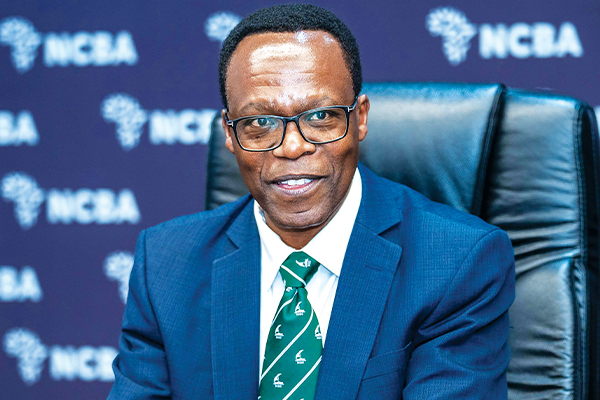
JOHN GACHORA
GMD & CEO NCBA GROUP PLC
In the financial services sector, the rubber meets the road when an organization incrementally displays quality in management decisions, prudence in capital allocation, sustainable value creation above cost of capital, steady growth in cash flow based operating profitability, and the creation of lasting value for the stakeholders, and the communities in which the organizations operate. This is the essence of John Gachora’s leadership as Group Managing Director and CEO of NCBA Group PLC.
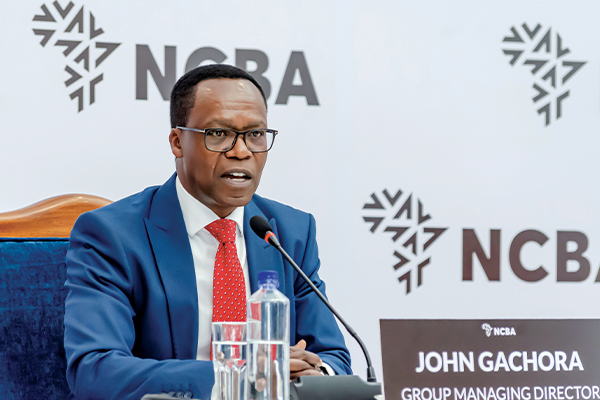
For CEOs with responsibilities beyond Kenya, the region’s operating environment has been rapidly evolving, becoming more volatile as a business landscape. To register significant growth to the bottom line, CEOs are expected to continue upskilling their workforces, adapt their tech architecture, and deploy result-specific growth models to be able to deliver. These, John Gachora continues to do. For instance, NCBA was the first in East Africa to deploy Intellect’s cloud-based banking solution, a technology that allows NCBA ’s corporate clients to now have access to faster transaction processing, expanded payment options, enhanced reporting tools and cash liquidity management.
John was the lead architect of one of East Africa’s most transformative financial mergers. On a clean sheet in 2019, he successfully orchestrated the union between NIC Bank and Commercial Bank of Africa (CBA), creating NCBA, now Kenya’s fourth-largest bank by assets. NIC’s dominance in asset finance and CBA’s strong foothold in commercial and mobile banking made the merger a masterstroke—combining complementary strengths to form a more formidable financial powerhouse. Having worked in Wallstreet, Africa Region Investment Banking expertise and leading NIC before the merger, John’s deep institutional understanding made him the best choice to spearhead the transition. Post-merger, he swiftly redefined NCBA brand and market presence, ensuring it stood for customer experience, innovation, and integrity.
John’s demeanour, succession management and leadership style continues to inspire staff, customers, and stakeholders alike. Among his notable initiatives is the appointment of high calibre Executives and Subsidiary CEOs, freeing him to spend more quality time contemplating and modelling strategic growth opportunities across the region at Group level.
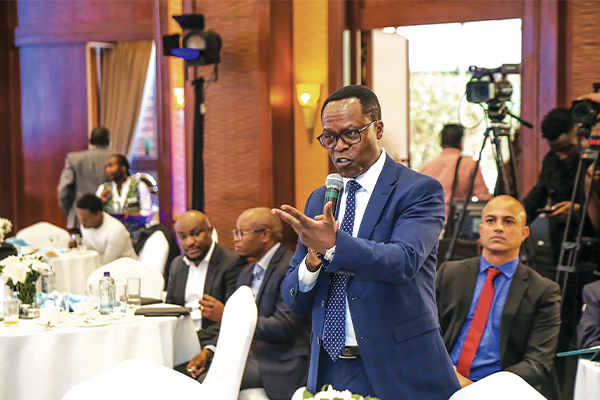
On social impact, the NCBA Golf Series, launched in 2021, has since evolved into signature events that provide platforms to nurture the sport of golf, connect business and build brand engagement—hallmarks of John’s meaningful approach to relationship and purpose driven leadership.
His philosophy is simple yet bold—make customers lives easier, maintain visibility, and reinforce trust through presence. It is a leadership stance that mirrors his belief in accessibility and service over short-term cost-cutting.
After the 2019 merger, John’s strategic foresight came to the fore, once again, in 2024 with NCBA’s full acquisition of AIG Kenya Insurance Company, expanding the Group’s play in the insurance sector. Now operating as NCBA Insurance, the acquisition complemented by NCBA’s bancassurance portfolio, positioned itself as a one-stop financial services brand. The move underscored John’s vision of diversifying growth while delivering end-to-end financial solutions with a single stroke.

Beyond corporate milestones, Gachora has established himself as a thought leader in Kenya’s financial services ecosystem. At a recent NCBA Economic Forum, he led high-level public-private sector dialogues on economic resilience, fiscal reform, and sustainable growth, contributing to shaping Kenya’s financial policy conversations. His active participation highlights not just institutional leadership but also a broader commitment to national economic progress. After all, sustainability, a deliberate constant in John’s strategy, has enabled NCBA to seamlessly integrate Environmental, Social, and Governance (ESG) principles into its operations through five key focus areas: reducing climate impact, supporting low-carbon transitions, engaging communities, mitigating environmental risk, and enhancing governance.
NCBA’s membership to the UN Global Compact reflects a public commitment to global sustainability standards in meeting the 2030 17 SDG goals—a commitment reinforced by, among other initiatives, John’s address at the 79th United Nations General Assembly in 2024, this address earning him acclaim for its clarity and conviction.

Internally, John’s leadership emphasizes empathy, empowerment and inclusivity. He fosters a culture where all employees feel valued and heard, encouraging open dialogue and independent thinking. His management philosophy decentralizes decision-making, enabling teams to act swiftly and effectively. This balance of empowerment and accountability has strengthened NCBA’s high performance and organizational agility, making it both people-driven and results-focused.
John Gachora’s journey began far from the boardrooms in Nairobi. Born in Gatamaiyu Village in 1968 as the eighth of thirteen children to tea-farming parents, he learned early the virtues of diligence and perseverance. From Kamahindu Primary School, John would later find himself in an MBA class at The Wharton School, University of Pennsylvania. The rare blend of technical, analytical, and managerial training laid the groundwork for a career that would soon be defined by precision and innovation.
John communicates well and with candour, with his intellect on issues ranging from economic integrity to entrepreneurial resilience which often exude ease and humility.
Beyond business, John maintains balance in his personal life. A devoted family man, he enjoys spending time with his wife and three children and finds peace in nature, particularly tending to his trees—avocados, casuarinas, and eucalyptus. A Mercedes and Golf enthusiast, he appreciates design and performance, both in cars and in business.

John Gachora’s tenure at NCBA exemplifies a fusion of strategic intelligence, human sensitivity, and relentless execution and business modelling. His stewardship continues to redefine what modern African Financial Services Leadership needs—bold, visionary, ambitious, grounded, and deeply attuned to both people and progress.