#6
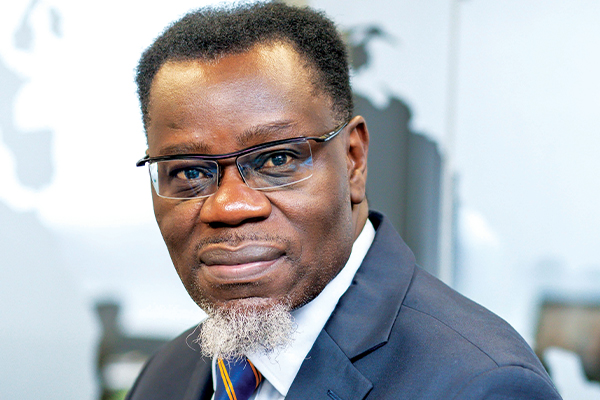
CRISPIN ACHOLA– MANAGING DIRECTOR BAT KENYA
In an era marked by unrelenting global socio-economic challenges, leadership and business impact is now measured not just by profit margins, but by how captains of industry are steering their organisations as a force for good.
Sub-Saharan Africa stands at an inflection point—where the next decade of growth will be defined not just by capital flows or innovation, but by the calibre of leadership that is shaping its economic destiny. Some of the key challenges and opportunities that leaders will need to navigate include climate change and geo-political conflict on one hand, and technological advancement and more discerning populations, on the other. This mix presents a chance for visionary private sector leadership to step up and play a critical role in driving socio-economic growth and transforming economies for the future.
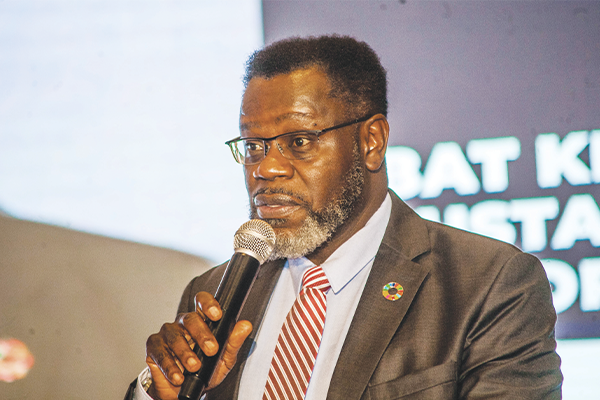
One of the leaders who have notably exemplified this strategic balance is Crispin Achola, Managing Director, BAT Kenya & General Manager, BAT East & Southern Africa (ESA) Markets. Cris, as he is fondly addressed by colleagues at BAT and his peers, has set himself apart as a barometer for progressive leadership across the sub-Saharan region. This is more so as he continues to lead the organisation through sustained tough macros and a dynamic regulatory environment, on the back of a strategic business transformation agenda – while not compromising the creation of shared value for the Company’s stakeholders.
Crispin stands tall amongst his peers, leading BAT’s business in over 10 markets including Kenya, Uganda, Zambia, Zimbabwe, Rwanda, Mauritius and Mozambique, with the first four being listed on the respective country securities exchange. The Company contributes to socio-economic development in the region through various ways, including partnering over 120,000 people in its value chain and providing direct and indirect employment for approximately 2,000 people across East & Southern Africa.
Since taking the helm in 2020, Cris has led the organisation through a major transformation underpinned by the Company’s ambition to reduce the health impact of its business. This is no mean feat, as the Company continues to navigate a dynamic regulatory and fiscal environment in this space.
Another key challenge for BAT’s business in SSA is illicit trade in tax evaded cigarettes. Crispin is spearheading public-private dialogues to redefine enforcement models across the region, combining data-driven insights with fiscal reforms to close revenue leakages. According to him, “Illicit trade in cigarettes is not only an economic issue but a matter of national security and public interest,” he explains. In Kenya, for example, an alarming 37% of the cigarette market is now illicit, while it sits at approximately 34% in Uganda by the end of 2024 – according to third party market research. This deprives the Kenyan and Uganda governments of an estimated KShs 9 billion and Ushs 32 billion respectively, in lost revenue annually. To address this, Cris is convinced that it is time for a bold, honest reset. He advocates for harsher penalties for illicit players and as he puts it, “every product smuggled is a direct theft from the region’s future.”
He further adds; “For legitimate business to thrive, a level playing field is imperative. On its part, BAT is committed to operating responsibly and in compliance with the applicable laws everywhere it operates. We endevour to do business with integrity, because it is the right thing to do.”
Having been previously recognised by this publication as one of the Top 60 most transformative CEOs impacting the economy and among the Top 25 most transformative leaders impacting business in Kenya, Cris is a business leader of many firsts. Most notably, he is the first Kenyan at the helm of the Company’s operations since it commenced operations in Kenya 118 years ago.
While these are notable accolades and milestones, they only tell part of his story. In a region marked by unpredictable geopolitical changes, economic flux and social-cultural nuances, Cris’ North Star is steering the business as it navigates a tightrope between profits, compliance and delivering impact and shareholder value.
“At BAT, our ambition is to create A Better TomorrowTM by building A Smokeless World. This is not merely about selling products”, he says. “It is about guiding the company’s transformation into a leading multi-category consumer goods business. A Smokeless World for us is one where adult smokers switch to better by migrating from cigarettes to smokeless alternatives.”
While this is his core focus, Cris has also rolled up his sleeves in unwavering efforts to build an impactful and sustainable business. This is in line with BAT’s global sustainability strategy anchored on five impact areas, namely; Tobacco Harm Reduction, Climate, Nature, Circularity and Communities. This strategy is adapted to meet local realities.
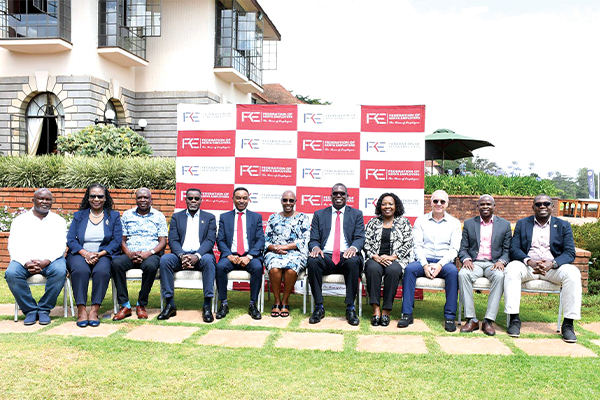
“While we are clear that reducing the health impact of our business is our principal focus area, we are also placing a greater emphasis on the importance of addressing climate change and driving excellence in environmental management. At the same time, the Company remains committed to delivering a positive social impact and ensuring robust corporate governance across the business.”
For Crispin, sustainability is not a checklist but a leadership imperative. Under his stewardship, BAT Kenya has exceeded its 2030 climate targets six years ahead of schedule—proof that disciplined execution and local partnerships can deliver global impact. BAT Kenya for example, posted a 54% reduction in Scope 1 and 2 GHG emissions in Kenya in 2024, against a target of 50% reduction in Scope 1 & 2 GHG emissions by 2030 (vs 2020 baseline). The Company has also registered sustained progress in its water stewardship agenda, with 36.6% of total water and 98.5% of total waste being recycled in 2024, against targets of 30% and 90% respectively, recycled by 2025.
Across other markets such as Zimbabwe and Zambia, the Company is on track to meet the same shared targets as mentioned above.
On afforestation, BAT Kenya facilitated the planting of about 1.5 million trees last year in partnership with its tobacco farmers and various community stakeholders.
At the forefront of Cris’ leadership at BAT, are the most valuable assets, the people. He is especially passionate about the empowerment of women on the back of a society that still lags in this area, and building a legacy of leaders for SSA’s rising economies. The Company drives various programmes, including the NextGen mentorship programme which seeks to equip women in their final year of university studies in Science, Technology, Engineering and Mathematics (STEM), by preparing them for the world of work. These capacity building programmes also spread onto management roles, where the Company deploys training programmes for women in leadership. Progress in these efforts is evidenced by a 63% representation of women in the BAT East & Southern Africa Leadership Team, as at 2025.
Reflective of the Company’s efforts to build a dynamic and purposeful place to work, the Company has been certified seven consecutive times (2018 to 2024) as a Top Employer in Africa by the global Top Employers Institute. This augments BAT as an employer of choice in the region.
As Africa’s economic engines accelerate, Crispin sees leadership not as a title but as stewardship—of value, of people, and of purpose. His vision is clear: to shape enterprises that endure, economies that include, and a continent that thrives. “I look forward to it with anticipation and promise, walking alongside my colleagues and our stakeholders, to build a sustainable business that is fit for today and the generations to come.” Cris concludes.