#5
NORAH RATEMO
DIRECTOR GENERAL – KENYA DEVELOPMENT CORPORATION
At the heart of Kenya’s evolving economic landscape is a quiet revolution led by CPA/FA, Norah Ratemo, a leader whose vision is redefining what development finance can achieve. She is the first substantive Director General (DG) to lead the Kenya Development Corporation (KDC) following the transitional period under an interim DG who managed the merger of three legacy institutions.
Her story is one of courage, determination, and the unwavering belief that finance, when directed with purpose, can create sustainable livelihoods and inclusive opportunities across a nation.

Norah Ratemo’s journey into leadership was neither sudden nor accidental. She joined the Corporation with a wealth of experience, a reputation for diligence, and a hands-on approach that has become her hallmark. She immerses herself in every aspect of the Corporation’s work, from participating in tree planting initiatives to supporting livelihood-enhancing projects beyond boundaries and engaging with employees on operational priorities. Colleagues describe her as approachable yet decisive, someone who ensures that the corporation’s work reaches every corner of Kenya.
Under her leadership, KDC has grown into a robust development finance institution with a renewed sense of purpose. It supports industrialization, enterprise development, and infrastructure growth while focusing on sectoral value chains to ensure that the specific needs of each sector are addressed. Through this approach, financial products are carefully developed in alignment with Kenya’s Vision 2030 to ensure strategic support across the economy. “Development finance is not just about lending; it’s about shaping livelihoods and creating opportunities that endure,” she states. This philosophy guides every program and initiative, from financing MSMEs to supporting large-scale industrial projects.
A defining feature of Ratemo’s leadership is her commitment to environmental, social, and governance (ESG) principles. She has placed ESG at the core of KDC’s strategy and operations, ensuring that every investment promotes sustainability, ethical governance, and positive social outcomes. Under her guidance, the corporation has championed green financing initiatives, supported renewable energy projects, and integrated climate-conscious decision-making into its investment processes. For Ratemo, ESG is not a compliance checklist — it is a blueprint for long-term socio-economic transformation.
Inclusivity is another pillar of her vision. KDC under Ratemo is committed to inclusive and sustainable financing, ensuring that historically underserved sectors, regions, and entrepreneurs have access to financial resources. This approach goes beyond token gestures; it involves tailored products, advisory support, and capacity-building programs designed to uplift enterprises while fostering equitable growth. Livelihoods are at the center of this strategy, with programs that empower women, youth, and rural entrepreneurs to contribute meaningfully to Kenya’s development story.
Norah Ratemo is also driving the 2.0 KDC Strategic Plan FY 2024-2028, a roadmap that signals the KDC’s ambition to expand its impact across key sectors, strengthen partnerships with local and international development partners, and foster innovation in development finance. The strategy emphasizes resilience, efficiency, and results-driven investment, aligning KDC’s activities with Kenya’s broader economic goals. By integrating lessons from the past with forward-looking strategies, the plan positions KDC as a transformative force in the East African region.
Employees training and capacity building have become central under her leadership. Ratemo believes that a motivated, skilled workforce is crucial to the KDC’s success. She frequently engages directly with the teams, mentoring and inspiring them while fostering a culture of accountability, innovation, and collaboration. Her presence in the field, from rural project sites to urban financial centers, underscores her commitment to understanding challenges firsthand and ensuring that KDC remains responsive and effective.
KDC also supports the Bottom up Economic and Transformative Agenda (BETA), which emphasizes sector-specific value chains to address unique industry needs. Through this initiative, KDC develops financial products that are tailored to each sector, ensuring that investments are not only strategic but also effective in creating sustainable economic outcomes. This approach enhances the resilience of businesses and communities alike, reinforcing KDC’s role as a catalyst for meaningful development.
KDC’s approach under Ratemo has yielded tangible socio-economic impacts. By financing projects that create jobs, increase productivity, and support sustainable industries, the corporation has contributed significantly to Kenya’s economic transformation. From expanding manufacturing capabilities to supporting tourism infrastructure, KDC’s interventions touch multiple sectors, improving livelihoods and creating pathways for long-term growth across all the key economic sectors.
Behind this success lies a careful balancing act: addressing market failures while ensuring financial sustainability. She has led efforts to reduce non-performing loans, improve operational efficiency, and strengthen risk management frameworks. These measures have enhanced the KDC’s credibility and capacity to deploy capital effectively while safeguarding its mandate to drive industrialization and economic development.
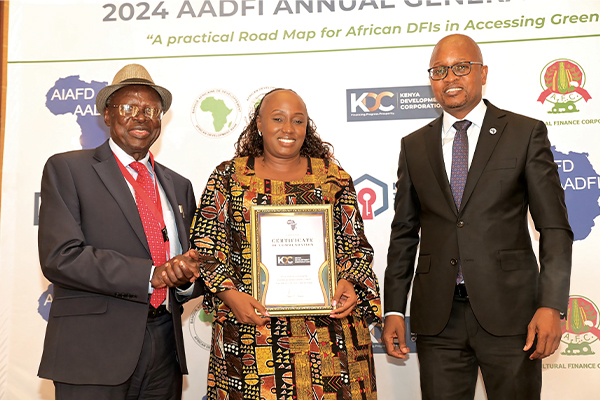
The story of KDC under Ratemo would be incomplete without acknowledging the historic merger that gave birth to the institution. The Government of Kenya took a bold step by consolidating the Industrial and Commercial Development Corporation (ICDC), Industrial Development Bank (IDB) Capital Limited, and the Tourism Finance Corporation (TFC) to form KDC. The move aimed to streamline resources, harmonize expertise, and create a single, cross-sector development finance institution capable of accelerating national economic development. This consolidation also ensured that KDC inherited decades of legacy experience, with ICDC being Kenya’s first development finance institution established in 1954. The merger seamlessly brought together complementary strengths, creating an institution that is more agile, resilient, and impactful than its predecessors.
The process was complex. Integrating organizational cultures, harmonizing systems, and addressing legacy inefficiencies demanded meticulous planning and a clear vision. Ratemo’s leadership was pivotal during this transition, translating the merger’s promise into a functioning, effective institution. She championed a smooth integration, ensuring that employees, clients, and stakeholders experienced seamless continuity and professionalism. Her role signaled not just administrative oversight but visionary leadership that would soon set the tone for KDC’s renewed mandate.
Since the merger, KDC has delivered measurable outcomes, reflecting the power of strategic finance aligned with purpose. Investments supported under Ratemo’s leadership have created jobs, expanded industrial capacity, and enabled innovative enterprises to flourish. These interventions have demonstrated the tangible benefits of a unified development finance approach, reinforcing the strategic rationale behind the merger. The corporation’s work extends beyond funding – it influences policy, drives sectoral development, and fosters sustainable, inclusive growth.
Innovation is central to KDC’s model. Programs like De-risking Value Enhancement for Pastoral Economies (DRIVE) and Supporting Access to Finance Enterprises Recovery (SAFER) exemplify this approach. DRIVE enhances livelihoods in pastoral communities by creating market access and resilient income streams, while SAFER provides recovery capital to businesses affected by economic shocks, enabling them to rebuild and sustain operations. These initiatives reflect Ratemo’s belief that development finance should combine capital provision with strategic support to maximize social and economic impact.
In addition to these programs, Ratemo has championed partnerships with international and local development partners. By leveraging these collaborations, KDC has expanded its reach and capacity, ensuring that more entrepreneurs, businesses, and industries benefit from targeted financing. These partnerships also facilitate knowledge transfer, technical assistance, and innovation, creating a multiplier effect that strengthens Kenya’s economic ecosystem.
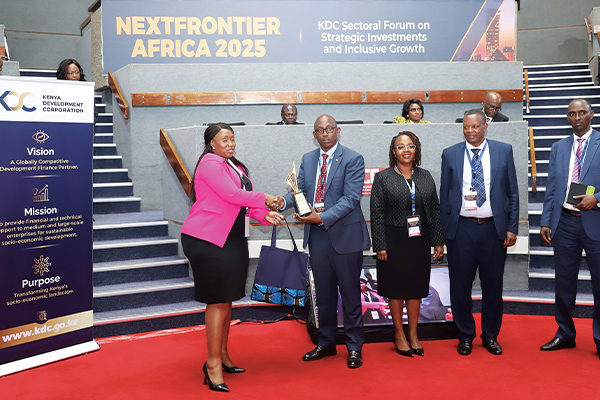
Leadership under Ratemo is characterized by a combination of vision and accountability. She understands that sustainable development requires rigorous planning, constant evaluation, and adaptive strategies. Whether engaging directly with small business owners or convening policymakers, her approach emphasizes clarity, responsibility, and results. This leadership style has inspired a culture of performance, innovation, and service across the KDC.
The socio-economic impact of KDC’s work is evident across multiple sectors. In manufacturing, financing has enabled enterprises to adopt modern equipment, scale production, and access new markets. In tourism, investments have supported infrastructure that enhances Kenya’s global competitiveness as a top-of-mind tourism destination. In agriculture and post-harvest management, KDC has facilitated value addition and improved supply chains, ensuring that farmers and processors gain higher returns and sustainable livelihoods. Through this integrated approach, the corporation touches all aspects of economic development, contributing to a more resilient and diversified economy.
Environmental stewardship is also central to Ratemo’s strategy. By embedding ESG principles in all financing decisions, KDC ensures that growth does not come at the expense of ecological sustainability. Investments in renewable energy, waste management, and climate-smart agriculture reflect this commitment. Ratemo believes that responsible development finance must balance economic, social, and environmental considerations, creating long-lasting benefits for communities around the industries and the nation at large.
Looking ahead, the 2.0 KDC Strategic Plan FY 2024-2028 outlines an ambitious roadmap for continued transformation. The strategy emphasizes expanding sectoral investments, strengthening partnerships, fostering innovation, and promoting sustainable and inclusive financing. Under Ratemo’s guidance, KDC is set to deepen its impact across value chains, support high-growth sectors, and empower entrepreneurs to drive Kenya’s industrialization agenda.
Norah Ratemo’s story is ultimately one of purpose. She demonstrates that leadership in development finance is not only about managing capital – it is about mobilizing vision, inspiring teams, and creating pathways for inclusive growth. By blending technical expertise, strategic thinking, and personal engagement, she has positioned KDC as a model institution for the East African region. Her journey offers lessons not only in financial stewardship but also in the power of purpose-driven leadership to shape national development.
The merger of Kenya’s development finance institutions provided the foundation, but it is the leadership of CPA/FA Norah Ratemo that has transformed this foundation into a thriving engine for socio-economic impact. With a focus on ESG, inclusive financing, sectoral value chains, and strategic partnerships, KDC under her stewardship is creating a legacy that extends beyond balance sheets to touch lives, communities, and the broader economy.
In the words of one of her colleagues, “Under her leadership, KDC is not just a financier; it is a partner, a mentor, and a catalyst for change.” This is the power of purpose in action, the ability of one leader, guided by vision and commitment, to reshape an institution, transform development finance, and ultimately, redefine what is possible for a Nation.