#6
THE M-PESA FOUNDATION
Beyond Corporate Check: How the M-PESA Foundation Builds Long-Term Self-Reliance in Kenya
Many people think of corporate social responsibility as short-term donations: a fast handout, a corporate photo op, and a project that fails as soon as the sponsors depart. In 2010, the M-PESA Foundation set out to change this approach.
As an independent charity trust, the foundation moved away from small, one-off donations. Instead, its leaders committed to supporting large, transformative community projects that tackle the root causes of poverty and social exclusion across Kenya. The foundation builds each project around community involvement and local ownership, focusing on long-term results instead of quick publicity. Its main goal is to help communities gain the resources and skills they need to thrive. This vision connects its work to Kenya’s Vision 2030 framework and nine of the United Nations’ Sustainable Development Goals, ensuring local projects support broader national and global progress.
Philosophy and Leadership
Long-lasting, effective philanthropy requires strong and thoughtful leadership. The M-PESA Foundation is led by experienced corporate and social impact leaders who understand how to scale operations while staying connected to grassroots realities.
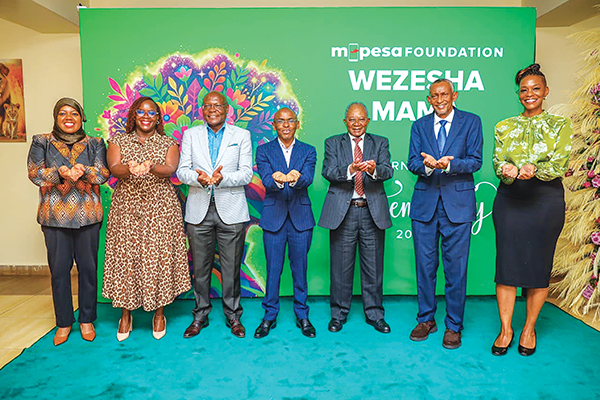
The leadership team includes Safaricom PLC Group CEO Peter Ndegwa, executive trustees Amb. Eng. Mahboub Maalim, Patricia Ithau and Celestine Munda, veteran trustee Michael Joseph, and Karen Basiye, Director, Sustainability and Shared Value.
This team approaches community investment as a long-term development strategy. They believe real change happens when residents are active participants, not just recipients of charity. By ensuring every project is transparent, well-reported, and built to last, leadership helps local communities gain the skills, infrastructure, and leadership needed to sustain these efforts for future generations.
Pillar One: Rethinking Education for Tomorrow’s Citizens
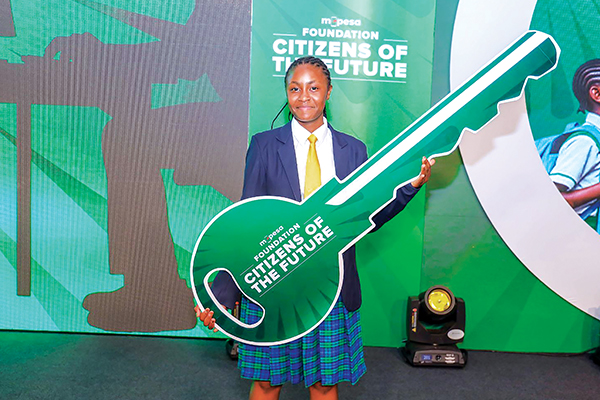
Education is central to the foundation’s mission and has already benefited over 1.74 million students in Kenya. Through the ‘Citizens of the Future’ programme, the foundation plans to improve school facilities, train teachers in ICT at more than 500 institutions across the country and provide scholarships to over 10,000 students in senior secondary and higher education over the next five years.
The M-PESA Foundation Academy is a clear example of this long-term commitment. The academy was created to offer fully funded high school education to talented students from all 47 counties in Kenya who face economic challenges. It helps shape future leaders by combining strong academics with a focus on leadership, entrepreneurship, and technology.
Beyond the classroom, the foundation continually invests in established institutions that assist marginalized communities. For example, it gives strategic support to the Starehe Girls Centre, a national school that serves as a haven for talented but poor young women. Furthermore, the charity tackles the sometimes-disregarded needs of children with special needs and physical disabilities. Through initiatives such as the Wezesha Elimu Phase 4 program in Kiambu County, developed in collaboration with CBM Kenya and Cure International Hospital, the foundation actively addresses the educational and medical barriers that children with disabilities face, creating spaces where they can learn with dignity. To ensure that learning leads to economic survival, the M-PESA Foundation recently collaborated with the University of Embu to develop a comprehensive Technical and Vocational Education and Training (TVET) scholarship program that provides young people with hands-on technical skills.
Pillar 2: redefining grassroots healthcare
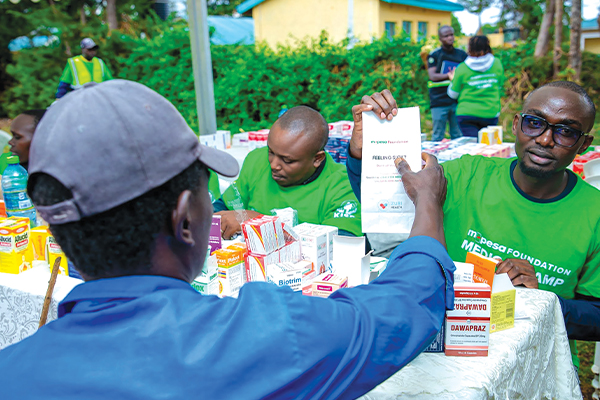
If education is the driving force behind opportunity, then a community’s health is the foundation. The M-PESA Foundation has touched the lives of approximately 6.7 million people through systemic healthcare interventions, with a strong emphasis on strengthening rural health facilities, maternal and neonatal outcomes, and offering specialized medical camps.
In many rural communities, pregnant women and small children confront life-threatening situations simply because local dispensaries lack basic medical equipment. The Gatunguru Health Centre exemplifies the foundation’s proactive approach. The foundation committed KES 9,2 million to build and equip the medical center, which was successfully upgraded to a fully operating Level 3 health institution. Before the intervention, a significant shortage of modern facilities compelled locals to travel considerable distances for emergencies, putting mothers at risk during deliveries. The newly constructed hospital has specialized consulting rooms, a dual-capacity birth room, and an eight-bed postpartum section. The project completely transformed local healthcare by donating essential equipment such as delivery beds, wheelchairs, laboratory refrigerators, and washing machines, as well as building critical support infrastructure such as septic tanks and underground water storage. This allowed the outpatient wing to treat an average of 80 patients per day comfortably.
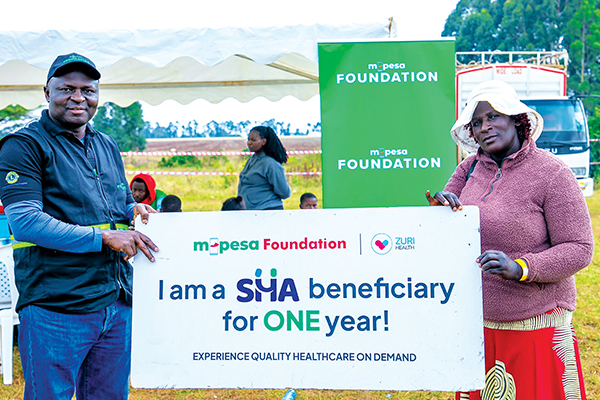
The trust also provides healthcare directly to populations that are completely disconnected from specialized services. The organization supports life-changing reconstructive surgery for women with obstetric fistula through projects such as the Fistula Medical Camp in Kajiado, restoring their health and social dignity. Furthermore, the trust works with global health organizations on key regional programs, including its ongoing cooperation with AMREF Health Africa in Homa Bay County, which is specifically focused on maternity, neonatal, and child health. The foundation integrates modern health platforms such as M-Tiba and Jamii Smart, combining mobile technology with medical delivery to ensure smooth healthcare tracking, insurance, and access for regular residents.
Pillars 3 and 4: Integrated livelihoods, the environment, and crisis response
To achieve true independence, communities must have access to safe drinking water, reliable energy, and food. The foundation’s Integrated Livelihoods pillar has helped over 173,699 people by offering clever, locally tailored solutions to environmental and economic concerns.
The Nyalani Dam project in Kwale County serves as an excellent example of this strategy. In collaboration with the Kwale County Government, the foundation invested KES 15 million to build a big solar-powered water pump system at the dam. This endeavor fundamentally impacted the economic trajectory of around 22,000 residents. Instead of relying solely on unpredictable rainfall, the solar pump effectively delivers clean water straight to residential taps while also providing steady irrigation to over 105 acres of local farmland. To make the initiative completely sustainable, the foundation also provided local farmers with crucial agricultural inputs including seeds and tools, while fostering the establishment of local agricultural cooperatives. The project transformed the entire region away from relying on emergency food help and toward a robust, self-sustaining local economy by directly connecting these cooperatives to competitive marketplaces.
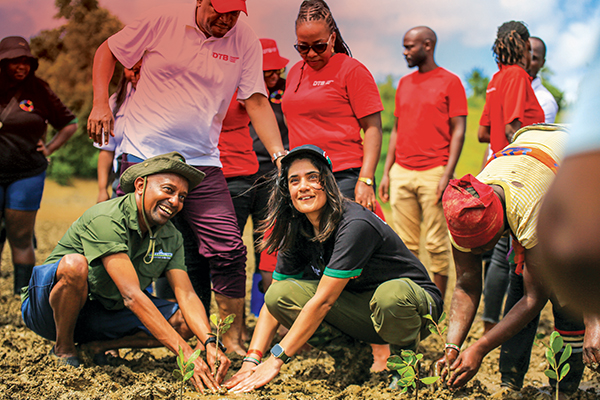
True sustainability entails maintaining the natural world that sustains human life. The M-PESA Foundation has impacted the lives of over 851,138 individuals through its Environmental Conservation pillar, which supports major ecosystem preservation activities. One of its most significant achievements is the development of instructional resources such as the Mau Eburu Guidebook, which assists communities in understanding, protecting, and sustainably managing the fragile, crucial woods and water towers on which surrounding populations rely for survival.
While the foundation generally focuses on long-term structural improvements, it retains the ability to intervene during times of intense national crisis. Through its specialized Disaster Response framework, the trust has impacted and strengthened more than 293,000 lives in Kenya. When catastrophic weather catastrophes such as extended droughts or flash floods endanger entire regions, the foundation arranges immediate aid. However, consistent with its primary concept, even its disaster response seeks long-term recovery. Instead of simply delivering temporary relief packages, it combines emergency food distribution with the establishment of safe water supplies, immediate healthcare interventions, and localized economic empowerment initiatives to ensure that when the crisis is over, the affected communities are stronger than before.
For more than a decade, the M-PESA Foundation has demonstrated that corporate generosity can go far beyond mere corporate box-ticking. By focusing its resources on education, health, integrated livelihoods, and environmental protection, the independent trust has pushed the needle from temporary relief to long-term empowerment. The millions of students, patients, farmers, and families affected across Kenya serve as a quiet reminder of what happens when an institution chooses to invest heavily in human potential rather than rapid financial gains. The M-PESA Foundation is working to create a fairer, self-sufficient future for all Kenyans through community ownership and ambitious, large-scale projects.