#5
I&M FOUNDATION
How a Bank-Led Foundation is Rewiring Philanthropy
Since its establishment in September 2020, I&M Foundation has been rewiring corporate philanthropy in Education, Environment and Enterprise.
From Chequebook CSR to Institutional Strategy, Kenya’s corporate philanthropy space is crowded. Many organizations claim to be “transforming lives.” Few can point to structured programs, named partners, measurable outcomes, and funding that doesn’t disappear after one budget cycle.
The I&M Foundation, the social investment arm of I&M Bank Group, is one of them. The Foundation has built a model of philanthropy that is intentional, data-driven, and tied directly to business strategy. With four pillars — Education and Skills, Environmental Conservation, Economic Empowerment, and Enabling Giving — its work runs across the entire breadth and depth of Kenya. And its latest moves signal a clear shift: deeper commitments, and a bet on green and digital innovation.
According to Dorine Nalo, the Head of the Foundation, I&M Foundation’s goal is not just to give. It’s to build systems that outlast everybody. The I&M Foundation is built to last.
THE FUNDING ENGINE
Most foundations are vulnerable to one thing: inconsistent money. I&M Foundation solved that early. It is funded through a 2% endowment of I&M Bank Kenya’s annual Profit Before Tax. That means resources are predictable, scale with the bank, and are protected from year-to-year budget pressures. The result is long-term planning. For instance, under the current I&M Bank’s iMara strategy, the Foundation is mandated to positively influence 10 million lives by the end of this year, 2026. Every partnership is therefore tracked against that goal — not by how many people were “reached,” but by what changed for them.
FLAGSHIP PROJECT
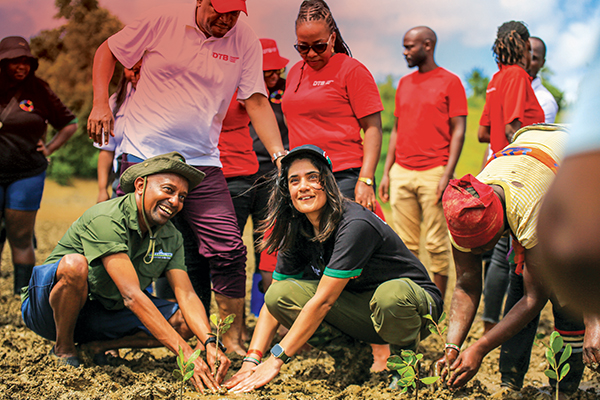
Project Imarisha Ngong Forest is the Foundation’s iconic project and involves restoring Ngong Forest, and livelihoods and is being delivered with the Kenya Forest Service. The investment to date is over KES 160 million. It is one of Kenya’s largest corporate-led urban forest restoration efforts. And it is not just about trees. Residents of Kibera and Dagoretti — communities living on the edge of a degrading forest — are hired as paid restoration workers.
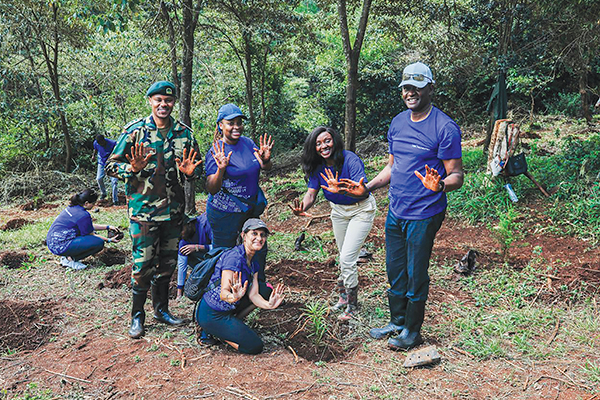
According to I&M Foundation, “a healthy forest and a paid household are not separate outcomes. I&M Foundation pursues both.” This linkage is deliberate. Conservation without livelihoods rarely survives.
THE NEXT CHAPTER
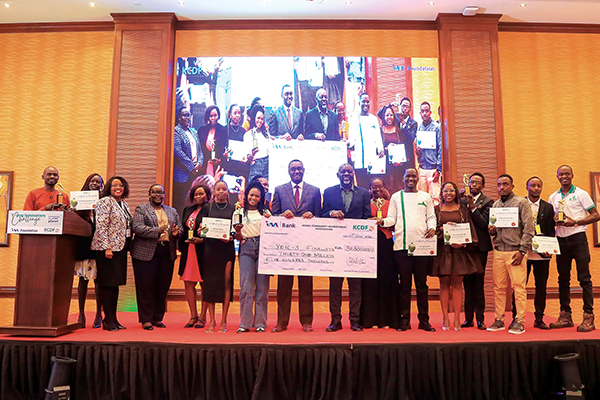
In June 2026, the Foundation announced a strategic pivot. Through a renewed partnership with the Kenya Community Development Foundation (KCDF), it committed KES 64.88 million to fund innovation-led sustainability. Through this initiative, the fund is supporting 10 organizations and 6 individual innovators developing tech-driven solutions to environmental and community challenges.
Grantees also get capacity-building — so good ideas don’t die for lack of structure. This builds on a 2021–2023 program with KCDF that was worth KES 57.5 million, which reached 170 schools, 63,000 young people, and 9,400 households in Kilifi and Narok through tree planting, clean energy, and waste management.
As Sarit Shah, Executive Director, I&M Bank Group puts it: “Transformation happens when communities, institutions, and innovators solve real problems together. Green + digital is where Kenya’s future is being built.”
COASTAL BET
Last year, the Foundation moved to the coast. With Furaha & Baraka Farms and the Mwatsumbo Community Forest Association, The I&M Foundation restored 60 hectares of mangrove forest in Mwatsumbo, planting 500,000 seedlings. Mangroves protect coastlines, store carbon, and sustain fisheries. Restoring them is climate action, and a strategic economic investment in fishing communities.
EDUCATION THAT ENDS IN A JOB
Kenya’s skills gap is well known: It is estimated that over 80% of high school graduates don’t qualify for university, and most TVET courses don’t lead to work. The I&M Foundation chose to operate in that gap. A KES 6.25 million partnership with Moringa School trained 25 youth from informal settlements in software development. Then it closed the loop: graduates were placed with iTalanta on live client projects, and I&M Bank’s Digital Factory offered internships with a path to full-time roles.
Other education bets include:
• Amara Charitable Trust: 21 students supported into TVET with mentorship
• Palmhouse Foundation: scholarships for disadvantaged secondary students
• Strathmore University: scholarships for higher education.
The principle is simple: fund training that ends in employment.
ENTERPRISE CHALLENGE
The Foundation’s boldest economic program is the Enterprise Challenge, run with The King’s Trust International and Asante Africa Foundation in Narok, Samburu, Marsabit, and Turkana. It’s not a workshop. Students use digital tools to simulate business, receive mentorship, and pitch to local business leaders. Winners get seed capital. The model is proven: 8 countries, and in Kenya previously, 2,500 students with 43% starting businesses.
With a KES 48.1 million commitment, I&M Foundation tripled the reach. In 2024 alone: 1,716 learners from 22 rural schools received support, with the target by end of cycle set at 6,300 students. According to I&M Foundation, “Enterprise ambition doesn’t start at university. And it shouldn’t be limited by geography.”
COMMUNITY WORK THAT MEASURES
In Narok, through The Maa Trust, the Foundation supports Maasai women to build sustainable livelihoods. In Nairobi, with the Jonathan Jackson Foundation, it delivered 37 jobs, 191 direct beneficiaries, and 9 community groups in informal settlements. Small numbers, but verified and impactful.
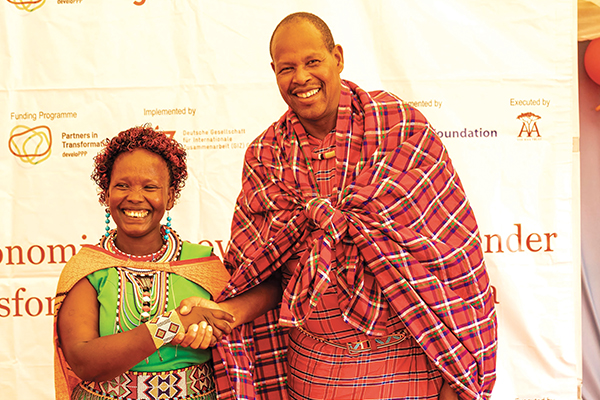
The Foundation has chosen depth and proof over big, unverifiable claims. According to the Foundation, “the real test of impact is what you see in the lives of people who were underserved before you arrived.”
WHAT MAKES IT DIFFERENT
After six years, three patterns stand out:
1. Use what works. Import proven models like Enterprise Challenge instead of reinventing them.
2. Close the loop. Training equals to jobs. Conservation equals to livelihoods.
3. Lead from behind. Fund, enable, measure. Let partners do the groundwork.
I&M Foundation is not Kenya’s loudest corporate donor. But across a forest, a coastline, Northern Classrooms in arid and semi-arid areas, and informal settlements in Nairobi, I&M Foundation has built something harder to find: a credible, structured, and accountable model for corporate social investment. One that treats impact as strategy, not PR.