#4
BRITAM FOUNDATION
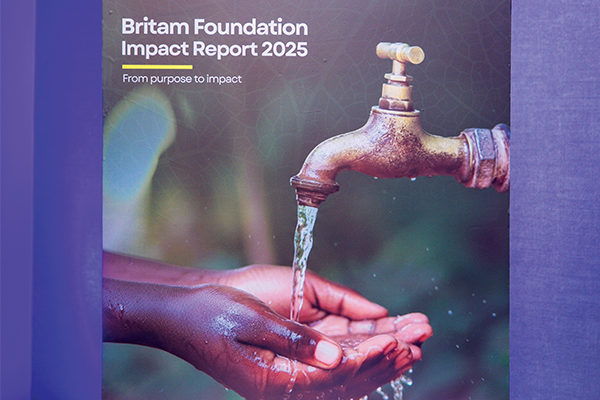
The Britam Foundation released its first Impact Report in February 2026, detailing its actions since mid-2024. Water access, maternal health, environmental restoration, and enterprise growth are the four work areas whose results are documented in the report. In about 2 years of operation, the Foundation documented contact with more than 172,000, people in those locations and the development of 1628 employment.
Britam Holdings PLC, a pan-African financial services company with operations in Kenya, Uganda, Tanzania, Rwanda, South Sudan, Malawi, and Mozambique, has a community investment division called Britam Foundation. Funded by a commitment of 1% of Britam Holdings’ yearly profit after taxes, the Foundation was operationalized in 2024. It operates on four pillars: enterprise, education, health, and the environment.
Water Access in over 100 Schools
The majority of the Foundation’s stated reach in 2025 is attributed to the water program. More than 172,000 students and community members have benefited from the delivery of solar-powered boreholes and hygiene education to 70 schools in Kenya, Uganda, Tanzania, and Rwanda.
Counties with the worst water scarcity are the focus of the work. The Foundation’s restored boreholes in Kitui and Kajiado, where kids used to spend long hours every day gathering water, now produce an average of 9,291 liters daily. According to reports from schools like Olmapinu Primary in Kajiado and Mutendea Comprehensive in Kitui County, students save an average of 5.9 hours a week that were previously spent on water collection. The Foundation attributed the 15.4% increase in school enrollment at these locations to better attendance and health outcomes linked to consistent water provision.
The infrastructure project is completed in collaboration with Davis and Shirtliff, which implements the installation of solar boreholes. To promote hygiene education and guarantee that communities can sustain the systems over time, the Foundation has also worked with the ministry to offer hygiene education sessions in 21 schools.
The program tackles a large-scale issue. 59% of Kenyans nationwide have access to safe drinking water, compared to 56% in rural areas, according to UNICEF data included in the paper. According to data from the Ministry of Water used in the paper, almost 28 million Kenyans do not have consistent access to clean water. Purchases from vendors are frequently made by households without piped connections at prices significantly higher than those of piped utilities.
Lea Salama: Maternal Health in Kibera
In Kibera, one of the biggest informal settlements in Nairobi, the Foundation’s Lea Salama program focuses on maternal and child health. The program supported 305 uninsured pregnant women in collaboration with Carolina for Kibera and Malaica Science.
The initiative integrates digital health platforms, networks of community health workers, and clinical treatment. The average number of prenatal visits for enrolled moms was six, which is double the national norm, according to the survey. Ninety-seven percent of participants had skilled deliveries. Ninety-four percent of the program’s households reported fewer costs associated with pregnancy. 97% of newborns delivered to program participants received their first vaccination, exceeding national immunization coverage goals.
The initiative was created in response to data on maternal mortality in Kenya. According to government statistics used in the article, there are 355 maternal deaths for every 100,000 live births nationwide, or about 5,000 deaths annually. That ratio increases to 706 per 100,000 live births in Kibera alone. The Foundation’s focus on care quality through community health workers and facility-based delivery assistance was influenced by Ministry of Health data cited in the report, which attributes 80% of maternal deaths to subpar care rather than lack of physical access to facilities.
The Foundation has since partnered with UNFPA, Jacaranda Health and White Ribbon Alliance to scale the program to Nairobi and Kwale Counties, targeting 10,000 mothers, 360 healthcare workers and 20 health facilities.
The Lea Salama program is part of the Foundation’s larger health pillar, which also uses focused interventions to address SDGs 3 (Health and Well-Being), 4 (Quality Education), 5 (Gender Equality), 10 (Reduced Inequalities), and 13 (Climate Action).
Reforestation at Mt. Elgon
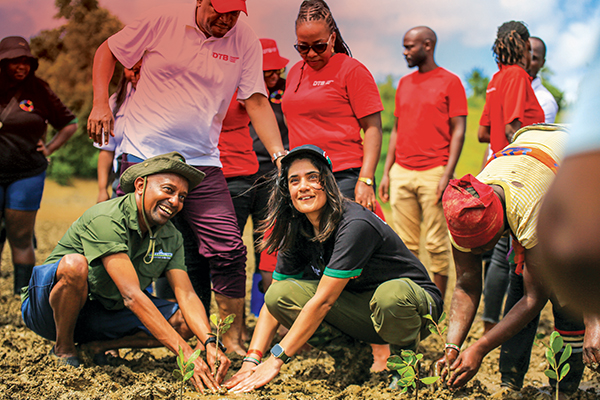
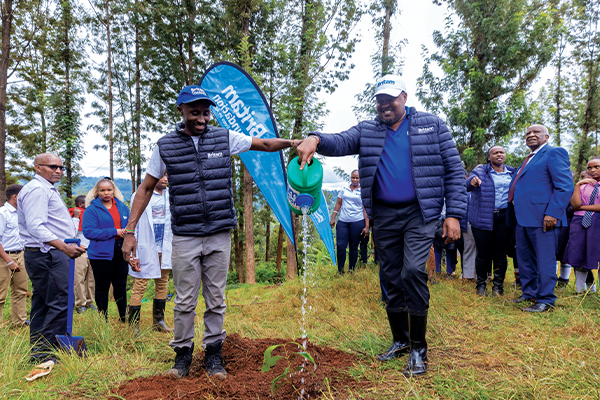
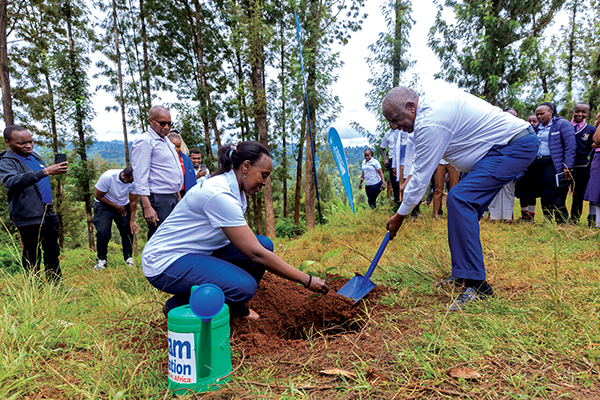
A forestry project encompassing more than 444 acres of the Mt. Elgon water tower is the focal point of the Foundation’s environmental program, which has planted 136,000 trees around the region. The project is carried out in collaboration with Jumbo Charge Trust, which upholds long-standing connections with county forest management bodies and Community Forest Associations.
One of Kenya’s five vital water towers is Mount Elgon. The site’s forest cover has dropped to 5%, endangering three counties’ water supplies and having an impact on downstream ecosystems that are linked to Lakes Turkana and Victoria. Using native tree species, the reforestation project has created 1,628 jobs through planting, nursery operations, and seed acquisition. The project received trees from 132 local nursery firms.
Kenya’s total forest cover is 8.8%, which is less than the Constitution’s 10% criterion. The Foundation’s program is a component of the larger national initiative to rehabilitate degraded forest land while also generating jobs in areas with little economic possibilities.
Enterprise Development and the Funding Model
The Foundation’s entrepreneurial pillar provides financial help, inclusive insurance, and access to digitalization tools for both individuals and businesses. The pillar is intended to support economic resilience and job growth in the areas where the Foundation works. The environmental program is mostly responsible for the 1628 jobs included in the Foundation’s impact numbers, with nursery and reforestation labor accounting for a sizable portion.
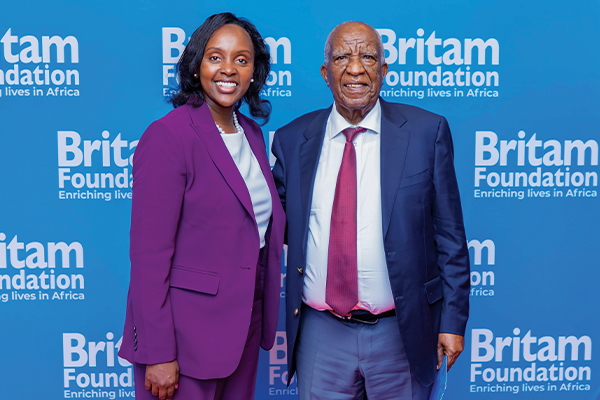
The strategy is purposefully cross-cutting, according to Catherine Karita, head of the Foundation. “Over the past year, our work has intentionally bridged our four pillars, recognizing that sustainable change happens when solutions address multiple dimensions of human wellbeing at once,” she stated.
The Foundation’s budget is directly linked to Britam Holdings’ financial performance according to the funding arrangement. Through the Foundation, Britam Holdings PLC donates one percent of its yearly profit after taxes to community investments. This implies that rather than considering community investment as a discretionary line item, the Foundation’s capacity scales with the group’s success, integrating it into the company’s financial planning cycle.
In comments released with the Impact Report, Britam Group Managing Director and CEO Tom Gitogo explained the reasoning behind such arrangement. “An investment in a just, stable, and prosperous Africa is the Britam Foundation. It reflects our view that strong local economies, empowered households, self-assured youth, and protected environments are the foundations of resilience. In the end, resilient insurance and financial services markets are built on resilient communities. The stability of the society we live in will determine our future,” he stated.
In the same article, Britam Foundation Board Chair Dr. Peter Munga provided background information. “The measure is now effect rather than aim. “What stands because we took action, not what we declare,” he remarked.
The first Impact Report spans around 14 months. Water access, maternal health, reforestation, and enterprise growth all recorded quantifiable results in the first full reporting period, and the numbers show early progress toward those longer-term goals.