#3
NCBA FOUNDATION
FINDING A CHILD WITH POTENTIAL
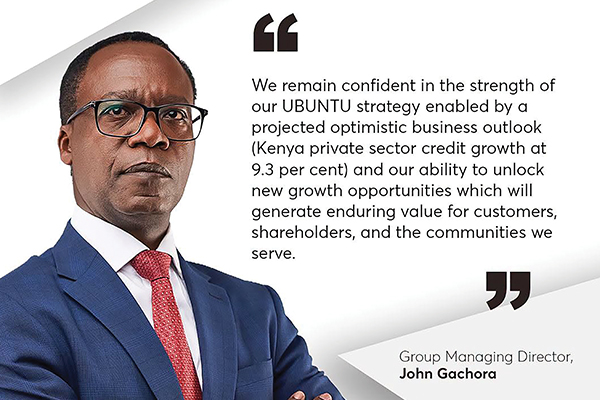
We all know John Gachora, the Banker who was the eighth of thirteen children. He grew up in Gatamaiyu village, having been born to subsistence farmers in Kenya’s Central Province. He managed to go to Alliance High School, followed by an exchange year at Brooks School in Massachusetts. This was followed with a stint as an electrical engineering student at the Massachusetts Institute of Technology (MIT). For his post graduate studies, John proceeded to Wharton for his MBA. Today, John runs NCBA Group, one of East Africa’s largest banks.
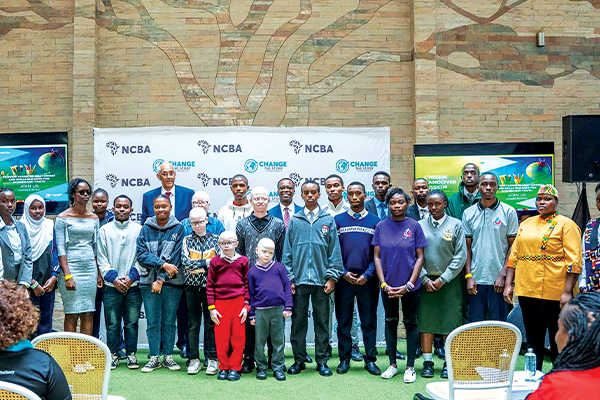
This arc, from a farming village to a corner office, forms the subtle logic anchoring NCBA’s corporate social responsibility (CSR) programs: find children with potential but in need and remove what’s standing between them and success. This logic has a name inside NCBA bank: Change the Story, a sustainability platform mantra launched in 2023 with 15 specific targets to be met by the year 2030, spanning environmental stewardship, social impact, and economic empowerment.
By early 2026, NCBA bank had mobilized KES 9.5 billion in green and sustainable financing, trained more than 70,500 women and young people in the creative economy, recycled 83.6% of waste in select offices, and put over 3,000 employees through internal sustainability training. NCBA also commits KES 100 million a year to community programs across education, mentorship, health, and skills.
The Belief Behind the Scholarships
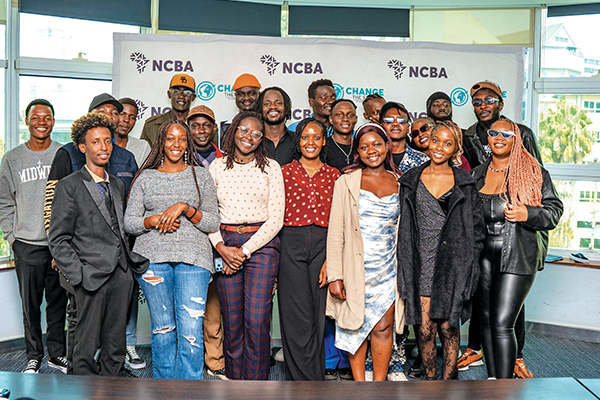
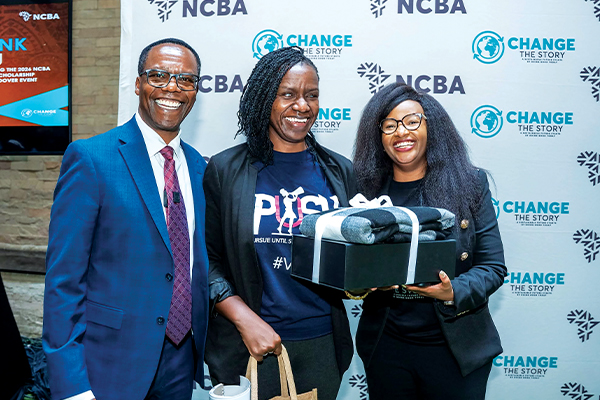
NCBA has funded scholarships since 2007. Nineteen years and more than KES 100 million later, the program has become one of the bank’s longest-running commitments, covering tuition, textbooks, uniforms, and dormitory supplies for students at the primary, secondary, and university level, alongside structured mentorship that keeps showing up after the money runs out.
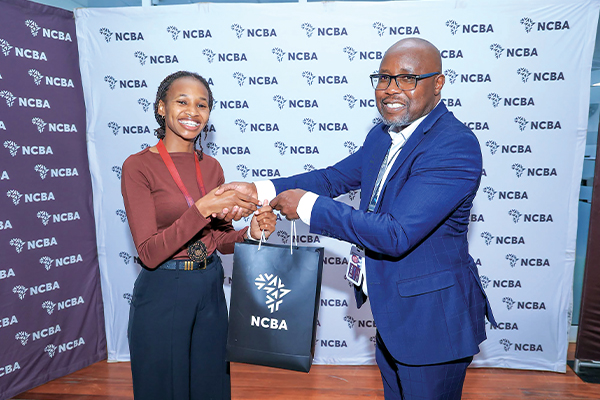
One of the program’s oldest partnerships is with Palmhouse Foundation in Githunguri, a relationship going back 20 years. Palmhouse itself started small: in the late 1990s, its founders Eric and Margaret began informally helping struggling families and farmers who supplied milk to the local dairy. What began as one-off help for desperate cases grew into a registered foundation that has since put more than 700 students through secondary school.
In 2026, 177 new students entered NCBA’s broader scholarship program through nine partner organizations, including Palmhouse, Edumed Trust, Daraja Kenya Initiative, SOS Kenya, and the M-PESA Foundation Academy.
NCBA has also relaunched a Boys Mentorship Programme with the Kenya Community Development Foundation, on the premise that young men need structured guidance just as much as scholarship money.
From Campus to Cubicle
The same belief shows up on the other end of the education pipeline. NCBA’s Go Getter Internship Programme takes recent graduates and rotates them through the bank’s business units for eleven months of real work, paired with a coach and mentor. The 2026 cohort brought in 50 graduates from 16 Kenyan universities. Since the program started in 2023, it has run 200 graduates through the pipeline, and half of them have converted into permanent or contract roles at the bank, a conversion rate that turns the internship from a resume line into an actual on-ramp to a career.
Banking on Women
NCBA’s AFAWA Acceleration Programme, run with the African Guarantee Fund and Unga Group PLC, tackles a specific and well-documented problem: women-led businesses across Africa face a financing gap estimated between USD 42 billion and USD 49 billion, not because the businesses are weak but because collateral requirements and loan structures were never built with them in mind.
The first cohort of 38 women in agri-food businesses received a combined USD 1.5 million in funding and training. A second cohort of 42 women joined in February 2026, with NCBA disbursing up to USD 5 million across both groups by July 2026. The program backs its lending with a partial guarantee from the African Guarantee Fund, which lets women who wouldn’t clear a conventional bank’s credit bar still get funded. Beyond the money, participants get mentorship, market exposure, and training on everything from climate risk to financial management.
Trees, One County and One Bank Balance Sheet at a Time
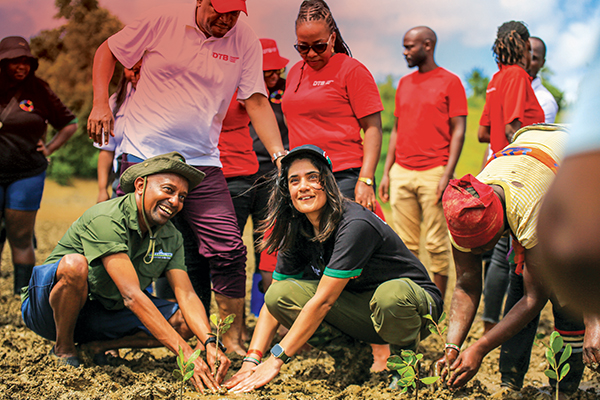
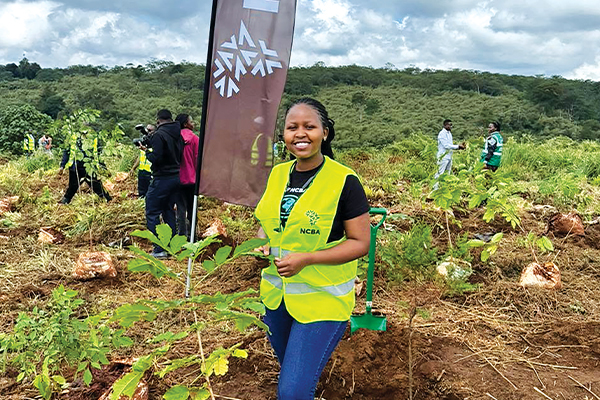
NCBA’s environmental push centres on a pledge to plant 10 million trees by 2030. The bank has planted more than 1.3 million since the strategy launched, including over 200,000 in the first quarter of 2026 alone, working with the Kenya Forest Service and the National Forest Association of Uganda. In Nairobi, staff have planted trees at sites including the Railway Museum, alongside partners and community volunteers. The bank has also installed six electric vehicle charging stations across Nairobi, Kigali, and Kampala, part of a push toward greener urban transport, and has committed to eliminating single-use plastics and hitting 100% waste recycling across its operations by 2030.
Turning Passion into a Pay Cheque
Kenya’s creative economy has grown fast, and NCBA has positioned itself as a financial partner rather than just a sponsor. Through its partnership with ELEV8 Live and HEVA Fund, the bank gives artists and creative entrepreneurs studio access, financial literacy training, mentorship, and credit products built around how creative income actually works: project-based, uneven, and often invisible to a standard loan officer.
The ELEV8 2025 Series Documentary, which aired in March 2026, followed creatives who grew their businesses through the program, and ELEV8 2026 is already underway with plans to expand. Across both editions, NCBA has helped more than 70,000 women and young people access the creative economy. At the documentary’s screening, Group Managing Director John Gachora connected the program to the bank’s broader philosophy: “Our Ubuntu belief reminds us that progress happens when we grow together. Supporting the creative economy means investing in young people, innovation, and culture as engines of economic transformation.”
What Ties It Together
Strip away the acronyms and the separate press releases, and NCBA’s community work reduces to one repeated move: find people whose ambition already exists and remove the specific obstacle in their way, whether that’s a Githunguri student who needs school fees, a woman farmer who needs a loan without conventional collateral, a graduate who needs eleven months of real work experience, or a musician who needs a credit product built for gig income instead of a salary.
It’s the same move that took a farmer’s eighth child from Gatamaiyu village to the top of one of Kenya’s largest banks. NCBA’s bet, backed now by KES 9.5 billion in green financing and KES 100 million a year in community spending, is that the country has more stories like that one waiting on the other side of a scholarship, a loan, or a mentor who shows up.